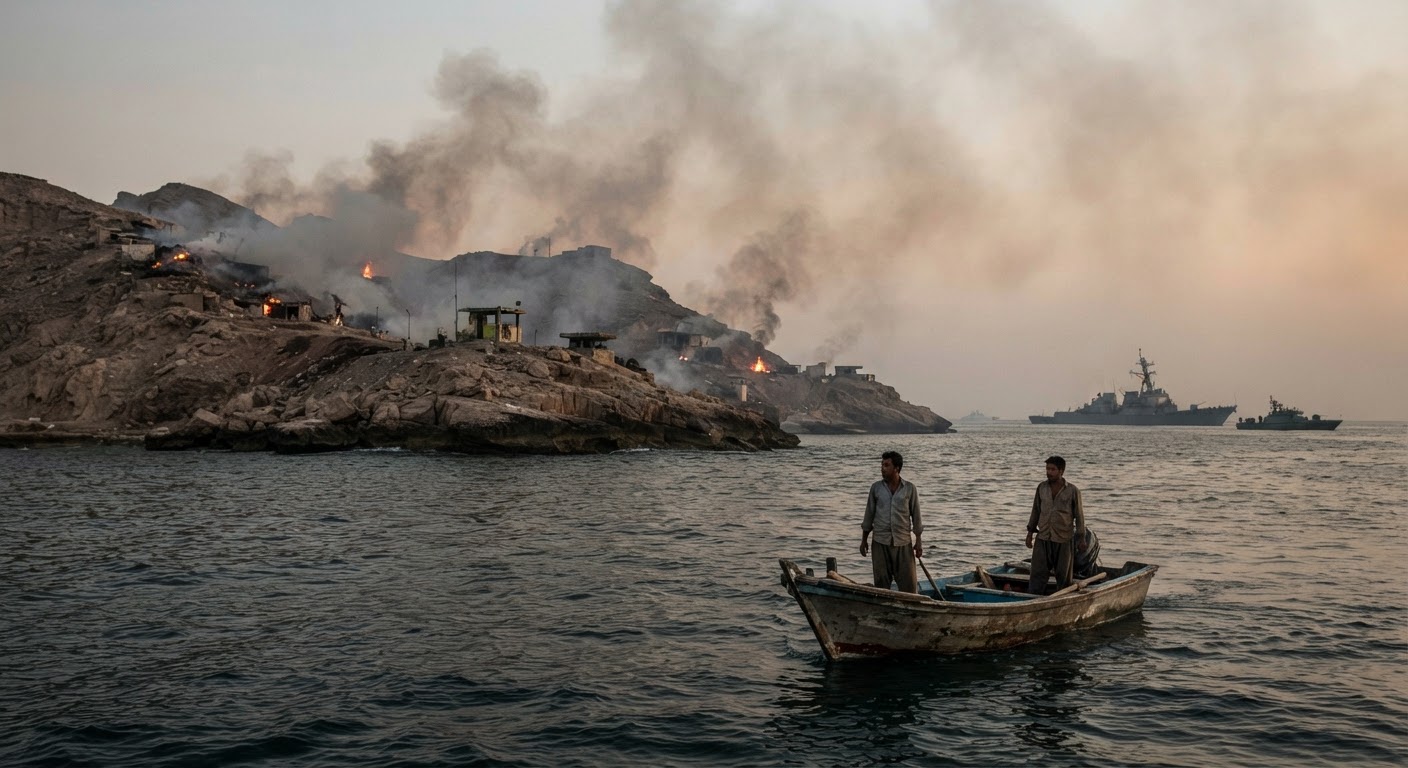
DUBAI/MUSCAT/AMMAN, August 31, 2026: Security in the Gulf region escalated sharply on Monday morning following an exchange of fire between the United States and Iran.
U.S. forces conducted a strike on Larak Island targeting Iranian rocket launchers and minelaying units.
Jordanian air-defense systems intercepted and destroyed eight ballistic missiles entering its airspace.
EASA recommends operators avoid Bahrain, Kuwait, Qatar, UAE, and Muscat FIR.
US Strike on Larak Island
Late Sunday night, U.S. forces conducted a strike on Larak Island in the Strait of Hormuz, targeting Iranian rocket launchers and minelaying units. According to U.S. Central Command (CENTCOM), American forces engaged in limited, precise action against IRGC units perceived as an immediate threat to commercial shipping. International reports identified the targets as two Iranian rocket launchers and minelaying-related positions. Larak Island sits in the northern part of the Strait of Hormuz, a critical corridor for global oil and LNG exports. While the U.S. stated the units were preparing for activities endangering civilian shipping, Iran labeled the strike an act of aggression, with the IRGC reporting unspecified casualties among personnel and civilians.
Hours later, Iran’s Islamic Revolutionary Guard Corps (IRGC) claimed to have launched ballistic missiles at U.S. military targets in Jordan. The Jordanian Armed Forces confirmed that its air-defense systems intercepted and destroyed eight missiles entering the country’s airspace, preventing threats to civilians or property. Following the strike, the IRGC claimed to have attacked King Hussein and Al-Azraq airbases in Jordan, alleging heavy damage to technical infrastructure, maintenance facilities, and fighter-aircraft positions. These damage claims remain unconfirmed independently.
Travel and Airspace Advisories
While there is no blanket shutdown of Gulf airports, the escalation has raised concerns regarding airspace risks, route diversions, and potential operational changes. The European Union Aviation Safety Agency (EASA) Conflict Zone Information Bulletin CZIB-2026-07R1 remains active as of August 31, 2026, recommending that operators avoid Bahrain, Kuwait, Qatar, and the UAE, as well as the Muscat Flight Information Region (FIR) west of longitude 58°E over the Gulf of Oman. Airlines, including Emirates, Etihad, Qatar Airways, Gulf Air, Kuwait Airways, Oman Air, flydubai, and Air Arabia, retain the authority to make individual operational decisions based on their internal safety assessments. Indian passengers traveling to or from the UAE, Qatar, Kuwait, Bahrain, or Oman are advised to verify flight status directly via airline portals due to the potential for short-notice schedule changes. Connecting passengers are particularly urged to monitor bookings, as onward routing may shift even if initial segments remain operational. Updating contact information in PNRs is recommended to receive direct alerts.
Global Energy and Strait of Hormuz Importance
The strategic importance of the Strait of Hormuz remains high; data from the U.S. Energy Information Administration shows that during the first half of 2025, an average of 20.9 million barrels per day of oil and petroleum liquids—approximately 20% of global consumption—and 11.4 billion cubic feet per day of LNG passed through the route. China, India, Japan, and South Korea accounted for nearly three-quarters of these flows during that period, highlighting the potential for significant impacts on global energy prices, freight rates, and insurance costs should disruptions persist.