UAE HALTS IRANIAN FLIGHTS AS U.S. SANCTION THREATS AND REGIONAL TENSIONS ESCALATE
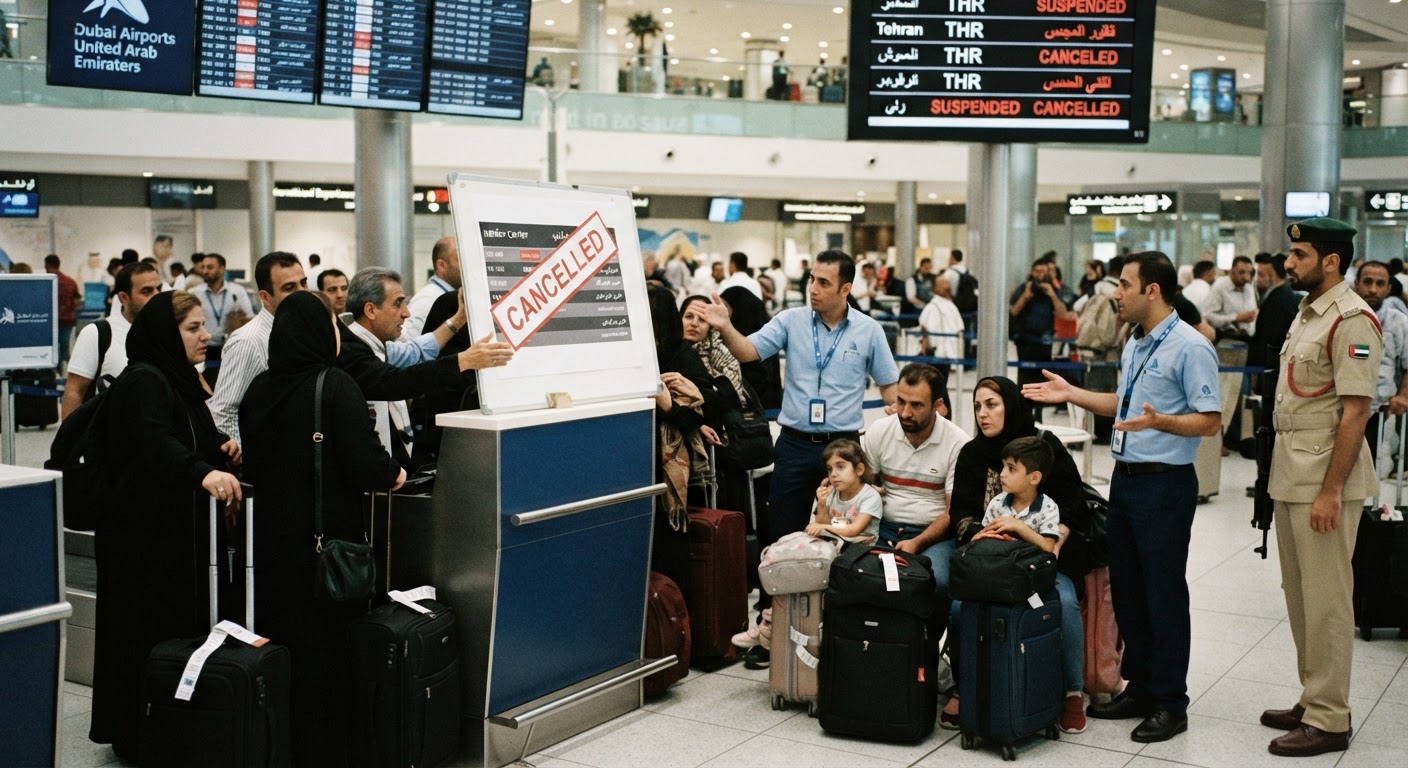
The United Arab Emirates has implemented an immediate and indefinite suspension of all flights operated by Iranian carriers to and from the country. This major aviation shift, announced by the UAE General Civil Aviation Authority on Thursday, 24 September, comes as geopolitical pressures reach a breaking point in the Middle East.
The U.S. Dollar Ultimatum
The decision was triggered by a high-stakes deadline set on 23 September by U.S. Treasury Secretary Scott Bessent. The Secretary issued a stark warning: any entity providing services to Iranian airlines—including airports, fuel suppliers, ground handlers, or ticket sellers—could face total exclusion from the U.S. dollar system.
The UAE is not acting in isolation; similar restrictions on Iranian carriers have already been adopted by Oman, Qatar, Baghdad, Georgia, and Azerbaijan.
Aviation Chaos and Retaliatory Threats
The reaction from Tehran has been swift and aggressive. Mohsen Rezaei, the secretary of Iran’s Supreme National Security Council and a former IRGC commander, issued a warning via state television, stating that neighboring nations complying with U.S. mandates would face retaliation that could render their airports unable to function.
The immediate impact on regional travel is significant:
- Airspace Closures: Tehran has officially prohibited UAE-registered aircraft from entering Iranian airspace.
- Flight Rerouting: Major airlines, including Flydubai, have been forced to abandon direct paths, rerouting flights over Turkey and Iraq to avoid the restricted zone.
Maritime Warfare and Economic Shockwaves
As skies become more complicated, the seas are turning equally volatile. At the United Nations in New York, a massive coalition of 80 nations—including Gulf states, Western powers, the European Union, India, Japan, and the Arab League—has demanded the unconditional reopening of the Strait of Hormuz.
The demand follows a series of violent maritime incidents that have heightened fears of a wider conflict:
- The Cape Dao Attack: On 2