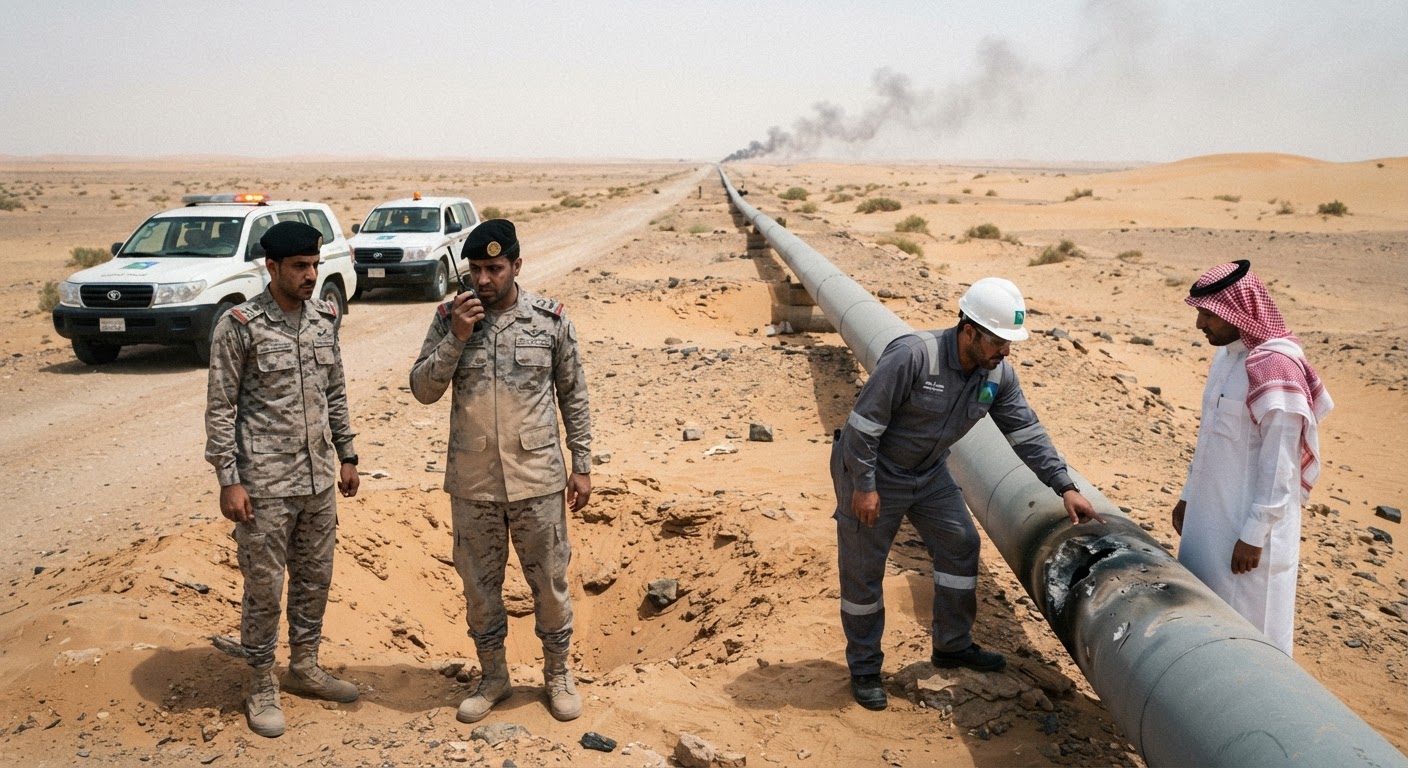
On September 12, 2026, U.S. President Donald Trump stated that Iran was probably responsible for a drone attack on Saudi Arabia's 1,200-kilometre East-West Petroline pipeline. The strike, which hit near Riyadh and Medina, forced the precautionary shutdown of the pipeline, which serves as a critical bypass to the Strait of Hormuz. Satellite imagery from Planet Labs and Copernicus Sentinel, dated September 11, 2026, shows fire damage and thick smoke in the Hejaz desert southeast of Medina. Injuries were confirmed, and pumping stations were reported to be burning.
Simultaneously, Iran-backed Houthi forces have seized Perim Island at the mouth of the Bab el-Mandeb strait following their capture of Mocha port. Saudi airstrikes have targeted Mocha airport in response.
Houthi-launched drones and missiles have also resulted in dozens of injuries in southern Saudi cities and damage to energy sites this week. Iraqi Prime Minister Ali al-Zaidi has requested time to investigate, leading to the sacking of the Maysan province police chief and an ongoing search for the launch teams.
The Saudi Foreign Ministry termed the pipeline attack a dangerous escalation but has deferred immediate military retaliation. GCC Secretary-General Jasem Albudaiwi, along with officials from Qatar and Bahrain, issued statements of solidarity.
Washington is providing limited air-defense support for tankers along the Omani coast. Diplomatic efforts are focused on meetings scheduled for Monday in Muscat, where Iran has invited Gulf foreign ministers to discuss a potential joint shipping corridor through Hormuz. Saudi and Iranian foreign ministers have held telephonic discussions regarding regional insecurity.
Global oil prices have surpassed $100 per barrel amidst concerns over the viability of energy transport routes. Military analysts suggest coordinated pressure between IRGC officers on the ground and regional proxies, threatening a two-ocean energy conflict.