Triple Defense Pact Activated: Saudi, Turkey, and Pakistan Unite Following Houthi Attacks
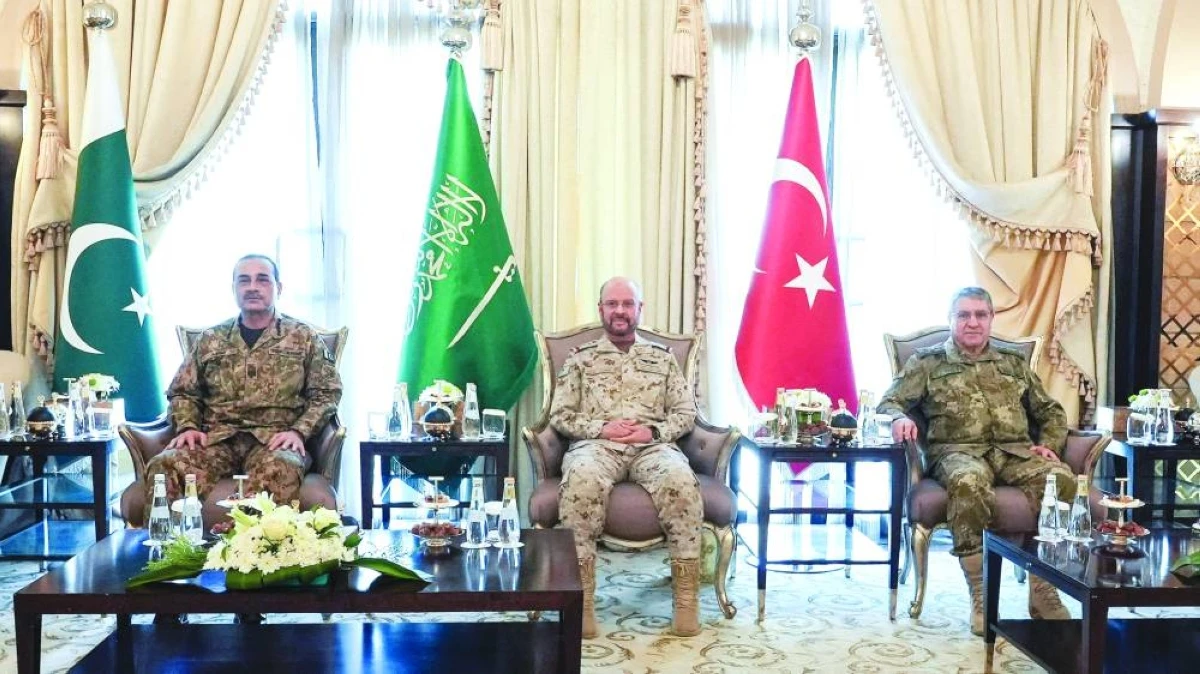
In a massive shift in regional security dynamics, military leaders from Saudi Arabia, Turkey, and Pakistan convened in Riyadh on Friday, September 25, 2026, to officially activate the Makkah Joint Defence Agreement. The activation comes as a direct response to escalating Houthi missile strikes targeting Makkah, Saudi oil infrastructure, and vital civilian sites.
A Unified Military Front
The agreement, originally signed on August 7, establishes a collective security framework among the three nations. The high-level meeting in Riyadh included:
- Field Marshal Asim Munir of Pakistan
- Gen. Selcuk Bayraktaroglu of Turkey
- Gen. Fayyadh bin Hamed Al-Ruwaili, Saudi Chief of General Staff
An armed attack against any signatory is considered an attack on all three nations.
Escalating Attacks and Infrastructure Damage
The decision to trigger the pact follows a wave of Houthi missile strikes aimed at destabilizing the region's economic and civilian heartlands. While the Saudi military reported that its air defenses successfully intercepted six ballistic missiles destined for Taif and Yanbu, the impact on the Kingdom's infrastructure has been significant.
Impact on Energy and Logistics
The strikes have caused notable disruptions to the global energy supply chain:
- Oil Loading: While loading operations at Ras Tanura have finally resumed after a months-long suspension, other facilities have suffered.
- Pipeline Damage: The East-West pipeline and critical facilities in Yanbu have sustained damage from the hostilities.
- Riyadh Incidents: Local alerts were triggered in the capital, where smoke was observed rising from a fuel depot located near King Khalid International Airport.
- Houthi Claims: Rebel forces have claimed to have successfully struck "sensitive sites" within Riyadh and Aramco facilities situated along the Red Sea.
The Geopolitical Chessboard: Iran’s Proposed Roadmap
As the trilateral pact takes effect, the diplomatic tension involving Iran remains high. Iranian President Masoud Pezeshkian told Fox News that the Houthi actions are independent of Tehran. However, Iranian Foreign Minister Abbas Araghchi has proposed a seven-day roadmap at the United Nations to resolve the crisis.
The Iranian proposal outlines several conditions in exchange for a regional ceasefire and the reopening of the Strait of Hormuz, alongside a resumption of nuclear talks:
- The lifting of the U.S.