Three Tankers Struck by Projectiles in Strait of Hormuz
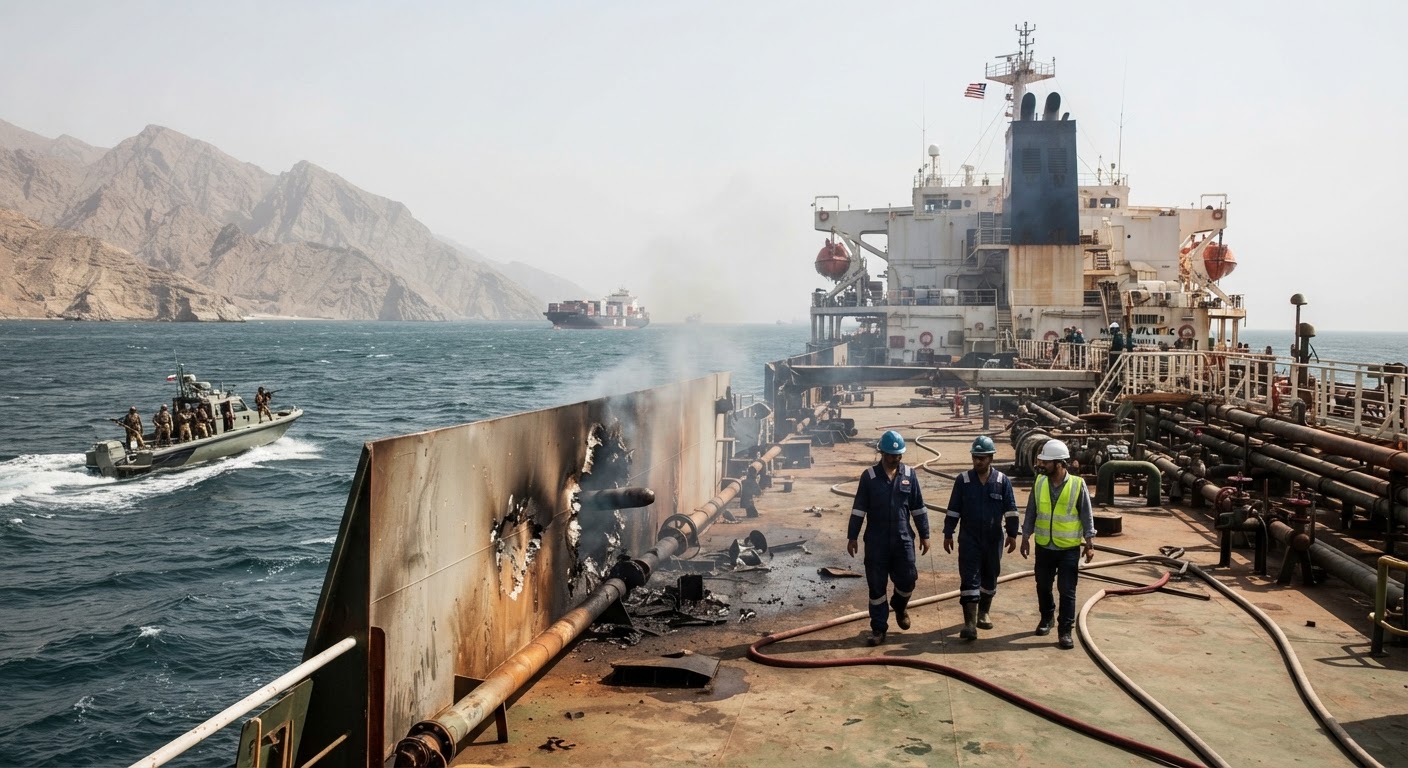
Three Liberian-flagged oil tankers were targeted by unknown projectiles while navigating the Strait of Hormuz on Tuesday, September 30, 2026. According to data from shipping intelligence firm Marisks, the vessels were operating with their Automatic Identification System (AIS) transponders deactivated at the time of the strikes.
While no group has claimed responsibility for the attacks, there are currently no official reports regarding casualties or the specific extent of the damage sustained by the vessels. The incident marks a significant escalation in a regional crisis that has persisted for 216 days.
Vessels Involved in the Attacks
The targeted vessels include two ships managed by ADNOC Logistics & Services, the shipping division of Abu Dhabi’s national oil company:
- Al Ruwais: An oil-products tanker that was recently observed conducting a ship-to-ship diesel transfer near Sohar, Oman.
- Mersin Prosperity: A very large crude carrier that transported roughly 2 million barrels of Iraqi Basrah crude near Sohar in mid-September.
The third vessel involved is the Aframax tanker Sinbad, which is managed by Anglo-Eastern Tanker Management. This vessel had previously loaded refined products at the Jubail industrial port in Saudi Arabia earlier this month.
Shipping Traffic Hits Record Lows
The ongoing instability, which began on February 28, 2026, following US and Israeli military actions against Iran, has decimated commercial maritime activity. Live tracking via hormuz.now indicates that commercial traffic has plummeted to approximately 5 percent of its usual volume.
Current data shows an average of only 4.6 vessel crossings per day, a stark contrast to the pre-crisis average of 84.8. In the 24-hour period leading up to October 1, only three commercial ships visible on AIS successfully crossed the strait. Meanwhile, 642 ships were reported stationary in the region, including:
- 187 vessels at Fujairah
- 64 vessels at Sohar
- 47 vessels near the strait that had been silent on AIS for at least six hours
Global Energy and Port Disruptions
The maritime volatility is causing significant ripples in the global energy market. Due to the heightened risks, QatarEnergy has extended its force majeure status for LNG deliveries into early December. Port activity across the region remains severely suppressed:
- Mina al Ahmadi (Kuwait): 0 percent activity
- Jebel Ali (UAE): 18 percent activity
- Ras Laffan (Qatar): 29 percent activity
- Ras Tanura (Saudi Arabia): 58 percent activity
Diplomatic efforts to resolve the tension continue, with Qatar-mediated discussions taking place in New York through late September. However, progress remains