Saudi UAE security summit held amid escalating regional crisis
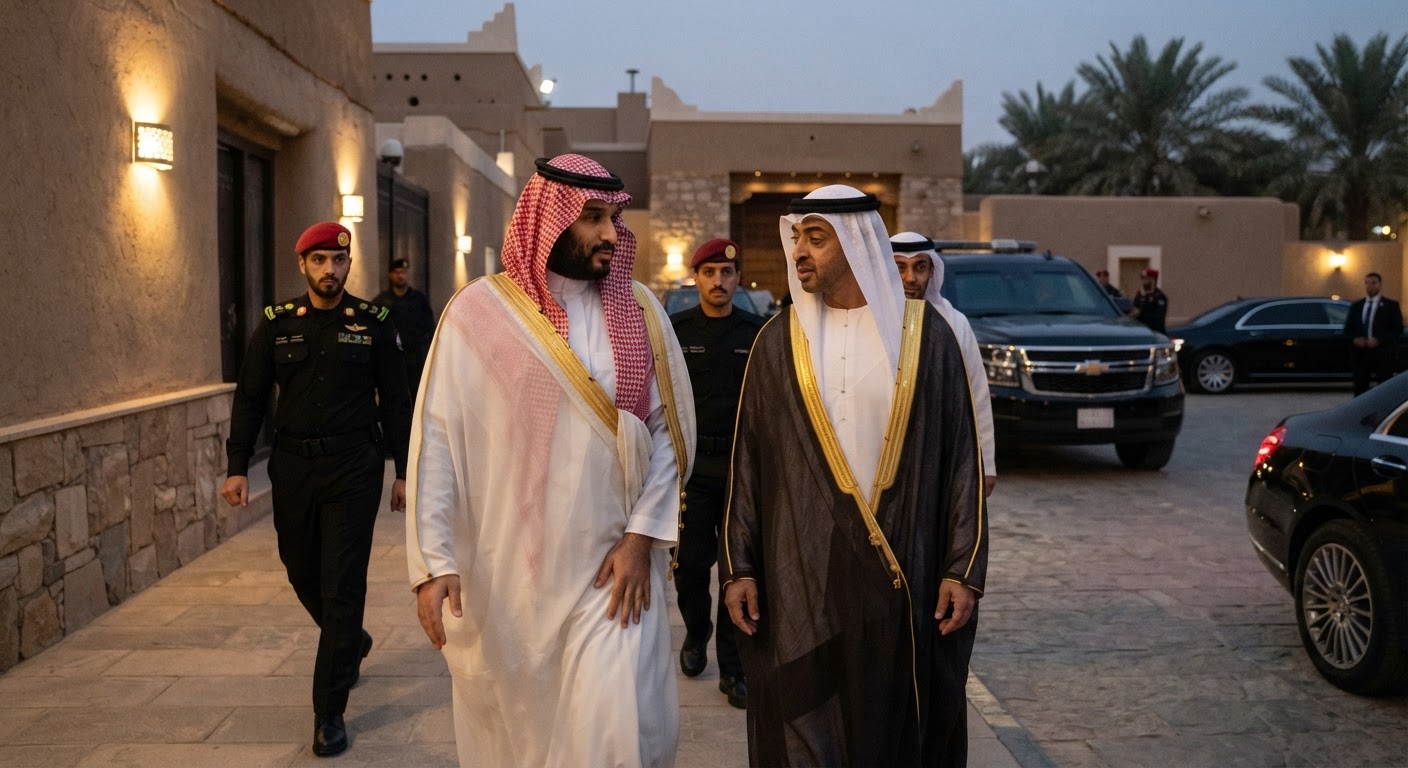
In a critical move to address mounting regional instability, a Saudi UAE security summit was convened in Riyadh on September 29, 2026. Saudi Crown Prince Mohammed bin Salman hosted UAE Vice President Sheikh Mansour bin Zayed Al Nahyan, marking the first high-level meeting between the two nations since their diplomatic ties cooled over Yemen policy last December.
The high-stakes discussions involved a heavy-hitting delegation from both sides. Representing Saudi Arabia was Defence Minister Prince Khalid bin Salman, while the UAE delegation included the secretary-general of the Supreme Council for National Security, the nation's crisis-management chief, and the secretary of Tawazun defence-enablement.
Addressing Houthi and Maritime Threats
The primary driver for this urgent meeting is the intensifying aerial and maritime instability in the region. Houthi forces have ramped up their campaign, launching a series of drones and ballistic missiles at major Saudi urban centers, including:
- Riyadh
- Yanbu
- Khamis Mushait
- Jazan
- Najran
These attacks have had tangible consequences for regional stability, causing intermittent closures of airports in southern Saudi Arabia and creating significant disruptions to oil shipping lanes in the Red Sea. The threat to energy infrastructure was further underscored earlier this month when an Iranian-linked drone strike successfully hit the East-West pipeline.
Diplomatic Deadlock in the Strait of Hormuz
As the summit in Riyadh focused on defense coordination, a parallel diplomatic struggle is unfolding regarding the Strait of Hormuz. Iranian Foreign Minister Abbas Araghchi recently met with Qatari mediators in New York to outline Tehran's requirements for reopening the vital waterway.
According to reports, Iran has presented a specific set of conditions to resolve the tension, including:
- The release of frozen Iranian funds.
- An easing of international sanctions.
- The removal of US naval pressure on Iranian ports.
- A reduction in the international pressure exerted on the Houthi movement.
However, a resolution remains elusive. US President Donald Trump has reportedly rejected a seven-day proposal aimed at easing the crisis, and US officials have indicated that any meaningful breakthrough is strictly tied to ongoing nuclear negotiations. Araghchi has requested a formal response from Washington by Tuesday.
Impact on the Gulf and Expat Communities
The ongoing 2026 regional conflict is no longer just a matter of state security; it is actively impacting the daily lives of millions. The volatility has begun to affect critical Gulf infrastructure and has created significant uncertainty for expatriate populations living in the UAE, Bahrain, Oman, and Qatar.
By coordinating their security strategies, the leadership in Riyadh and Abu Dhabi aims to form a unified front against the evolving maritime and aerial threats that continue to jeopardize the economic and social stability of the entire Gulf region.