Saudi Defenses Intercept Houthi Drones and Missiles
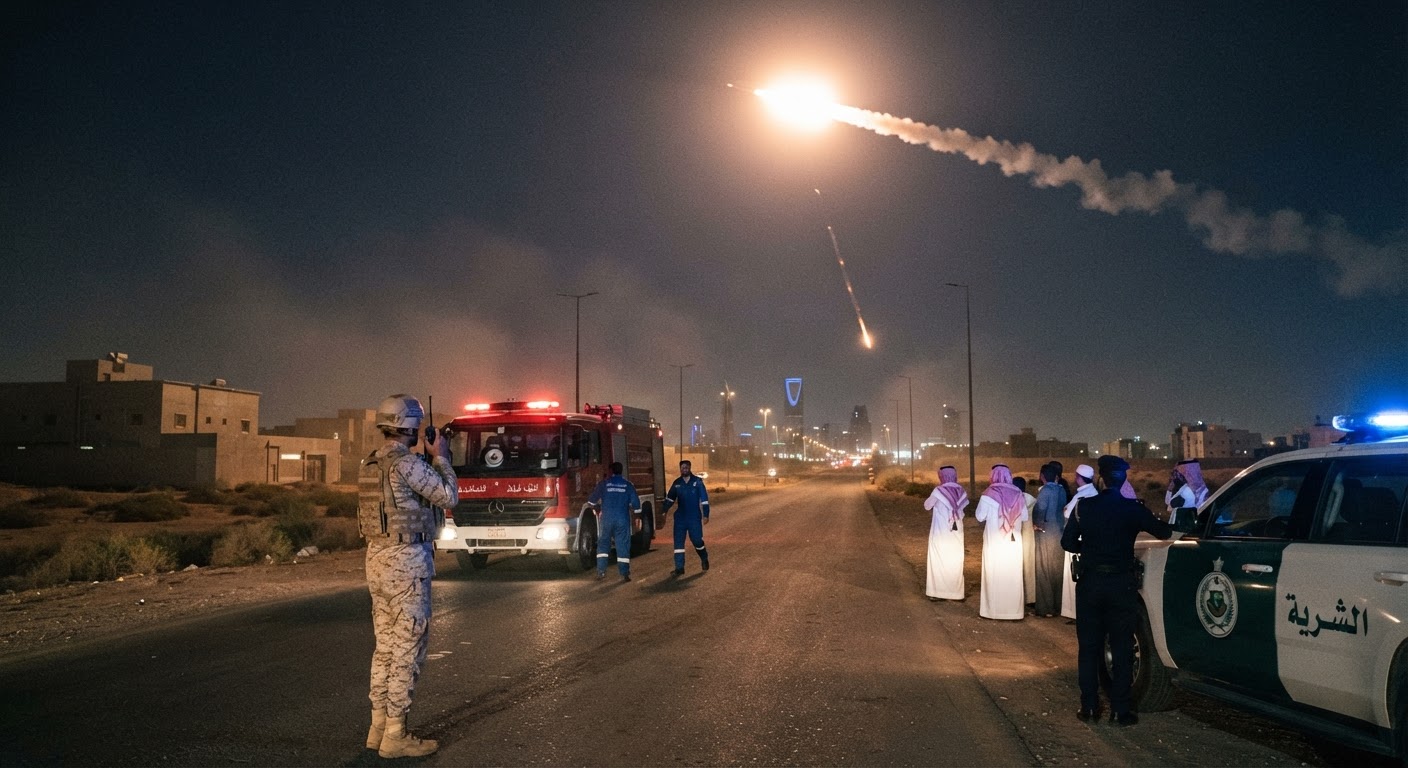
In a significant escalation of regional tensions, Saudi air defenses Houthi drones and ballistic missiles were successfully intercepted in the early hours of Saturday, September 26, 2026. The aerial attacks targeted the capital, Riyadh, and the area of Khamis Mushait, marking a fresh wave of hostilities from Houthi forces.
Col. Turki Al-Maliki, the spokesman for the Saudi-led Coalition, confirmed the successful interceptions via X shortly after 4 a.m. local time. According to the official report, the coalition neutralized two drones directed at Riyadh and two ballistic missiles aimed at Khamis Mushait.
Local Alerts and Recent Escalations
While no public alerts were issued for the capital, the situation in the southern regions was more visible. Residents in Khamis Mushait and the nearby city of Abha were alerted to the danger by Civil Defense sirens as the missiles approached.
This latest engagement follows a rapid series of Houthi military operations, including:
- A declared blockade on Saudi maritime shipping.
- The seizure of Yemen’s Red Sea coastline.
- Targeted attacks on facilities located in Yanbu.
The intensity of the strikes has increased significantly in recent days. Just this past Thursday, Saudi defenses intercepted six ballistic missiles that were attempting to strike Taif and Yanbu.
Geopolitical Tensions and Regional Security
The strikes occur as Saudi Arabia strengthens its regional defense alliances. Saudi Defense Minister Prince Khalid bin Salman recently reaffirmed the Makkah Joint Defence Agreement alongside Pakistan’s Chief of Defence Forces, Field Marshal Asim Munir. This move comes as Saudi Arabia, Pakistan, and Turkey work toward establishing a new framework for regional security.
The international community has responded with a mix of support and condemnation:
- France has pledged military support to the region.
- The UN Security Council has issued a formal condemnation of the attacks.
Despite denials of direct involvement from Iran, Gulf nations have accused Tehran of providing support to the Houthi offensive. Adding to the tension, Houthi political bureau member Hezam Al-Assad described these recent strikes as a "rehearsal" for a much broader escalation.
Impact on Energy and Maritime Stability
The ongoing conflict continues to cast a shadow over global markets. Instability in the Red Sea and the Strait of Hormuz poses a direct threat to maritime traffic and energy markets. As air-defense efficacy remains a critical concern for Gulf states, the ability of existing systems to protect vital infrastructure will be central to maintaining regional stability.