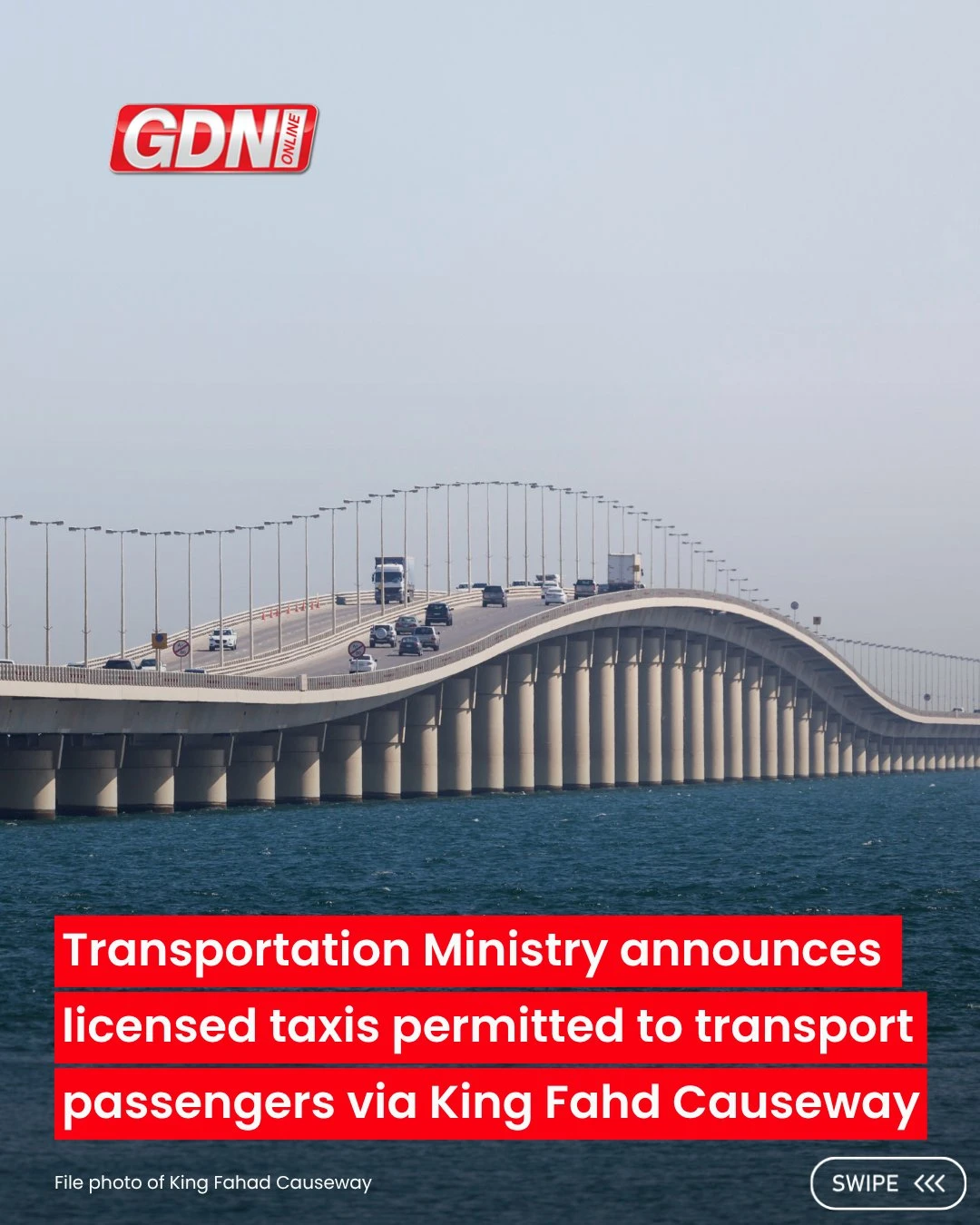
Licensed taxi services between Saudi Arabia and Bahrain have officially commenced following authorization from the Transport General Authority in Saudi Arabia, effective September 6, 2026. Bahrain’s Ministry of Transportation and Telecommunications confirmed the initiative in coordination with Saudi authorities, allowing licensed taxis from both nations to transport passengers across the 25-kilometre King Fahd Causeway, which connects Al Khobar and Al Jasra.
- Cross-border taxi services officially started on September 6, 2026.
- Taxis can transport passengers across the King Fahd Causeway between Al Khobar and Al Jasra.
- The initiative was coordinated by Saudi Arabia and Bahrain transport authorities.
Operators must adhere to strict guidelines issued in a circular by the TGA and reported by Saudi Gazette and Okaz. To utilize the service, trips must be booked through a licensed taxi or passenger-transport broker, and a passenger loading manifest must be submitted via an official TGA form prior to departure. Drivers are mandated to verify passenger travel documents, including passports, visas, or GCC IDs, and ensure systems are integrated with security platforms such as Shomoos. The TGA explicitly prohibits Saudi taxis from conducting local point-to-point trips within Bahrain or picking up return passengers in Bahrain until further notice. Furthermore, operators must only charge approved fares.
For expatriates residing in the Eastern Province—including those in Khobar, Dhahran, and Dammam—the service provides a new transport option for travel to Bahrain. Passengers are advised to carry all necessary residency and travel documentation. The King Fahd Causeway remains subject to standard vehicle tolls, which were historically SAR 35 or BHD 3.5 for small vehicles, and it remains unclear if these costs are included in taxi fares. The service does not grant exemptions from immigration queues, and travelers must plan return trips independently using a Bahrain-licensed taxi, bus, or alternative booking. The initiative was formally coordinated on September 5, 2026, with the operational framework detailed by Saudi authorities on September 13, 2026. Authorities emphasize that this service is restricted to licensed operators and brokers, cautioning against the use of unlicensed private drivers.