Saudi Arabia Deflects Houthi Missile Strikes Amid Growing Regional Instability
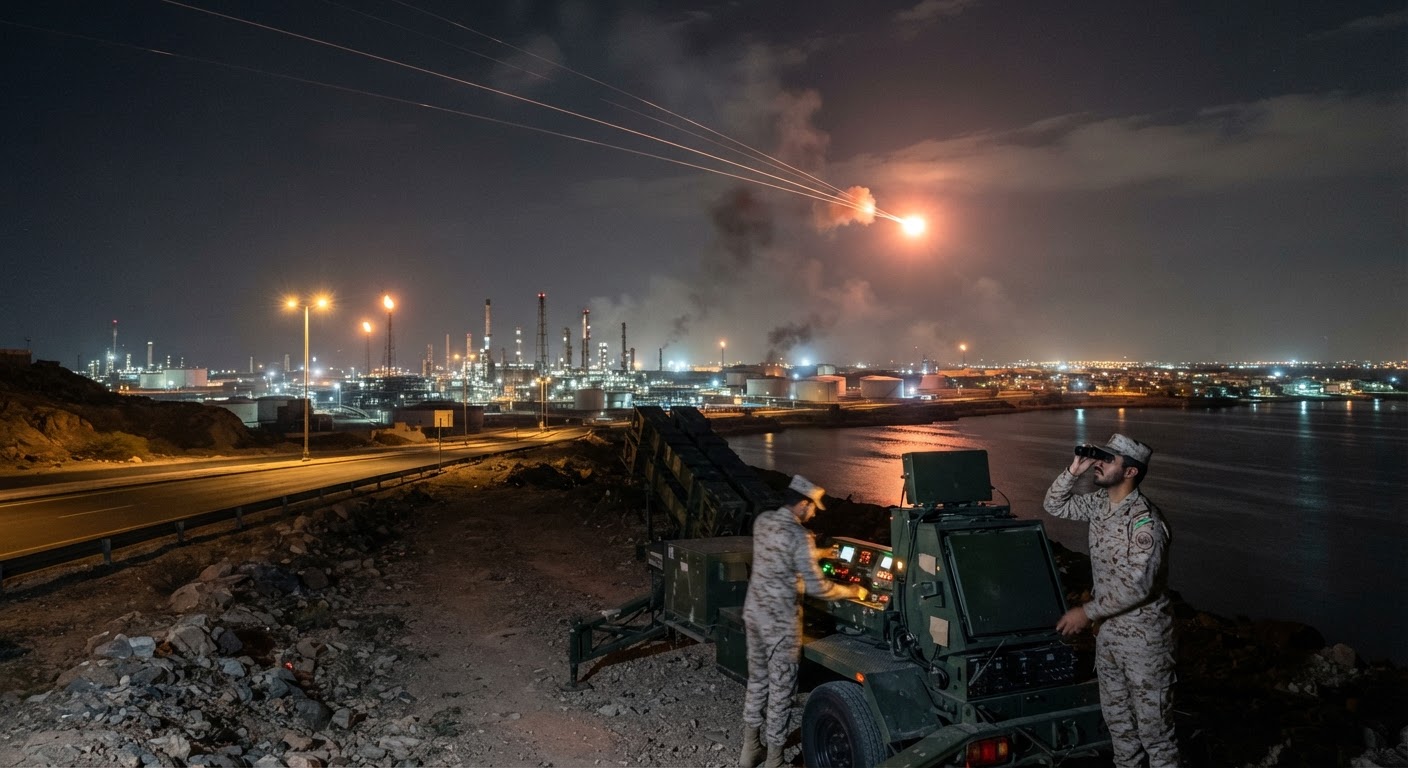
On September 25, 2026, Saudi Arabian air defense systems successfully intercepted six ballistic missiles launched by Iran-backed Houthi forces. The aerial barrage targeted the Yanbu industrial belt and Taif, triggering emergency alerts throughout Jeddah and Mecca.
Coalition spokesman Maj. Gen. Turki al-Malki confirmed that the projectiles were destroyed before they could impact their intended targets. However, the incident has seen conflicting reports regarding the effectiveness of the strikes. Houthi spokesman Yahya Saree claimed that his forces successfully struck military locations in Jazan as well as sensitive facilities in both Riyadh and Yanbu. To date, Saudi authorities have not confirmed any successful hits or reported any official casualties.
Market Volatility and Strategic Shifts
The sudden escalation in hostilities had an immediate impact on global energy markets, sending Brent crude prices climbing toward a one-week high. This tension follows the Houthi seizure of Yemen’s Red Sea coastline earlier this month, a move that has severely disrupted maritime traffic in the Strait of Hormuz.
In response to these logistical challenges, Saudi Arabia has been forced to increase its strategic reliance on the East-West pipeline to ensure oil reaches the Yanbu port despite the maritime instability.
Threat of Indian Ocean Expansion
The geopolitical stakes continue to rise as Iran signals potential expansion of the conflict. Yahya Rahim Safavi, a senior military adviser to Iran’s Supreme Leader, warned that if the US or Israel carries out military strikes against Iran, the conflict could expand its military front into the Indian Ocean.
In an effort to coordinate a response to this intensifying instability, Saudi Arabia, Turkey, and Pakistan have scheduled an urgent meeting of their chiefs-of-staff. This meeting will be held under the framework of a joint defense pact to discuss the broader security implications for the region.
Widespread Regional Impact
The broader conflict, which saw a significant intensification following US-Israeli strikes on Iran in February, continues to cast a shadow over the Middle East. Airspace across several nations has been affected, including:
- The UAE
- Bahrain
- Qatar
- Kuwait
- Jordan
While Oman has attempted to step in as a mediator to ease tensions, the regional security outlook remains highly volatile. This instability poses direct risks to the lives and livelihoods of the region's large expat and migrant worker populations, who face:
- Frequent emergency sirens.
- Sudden flight cancellations.
- Rising costs of living driven by energy market disruptions.