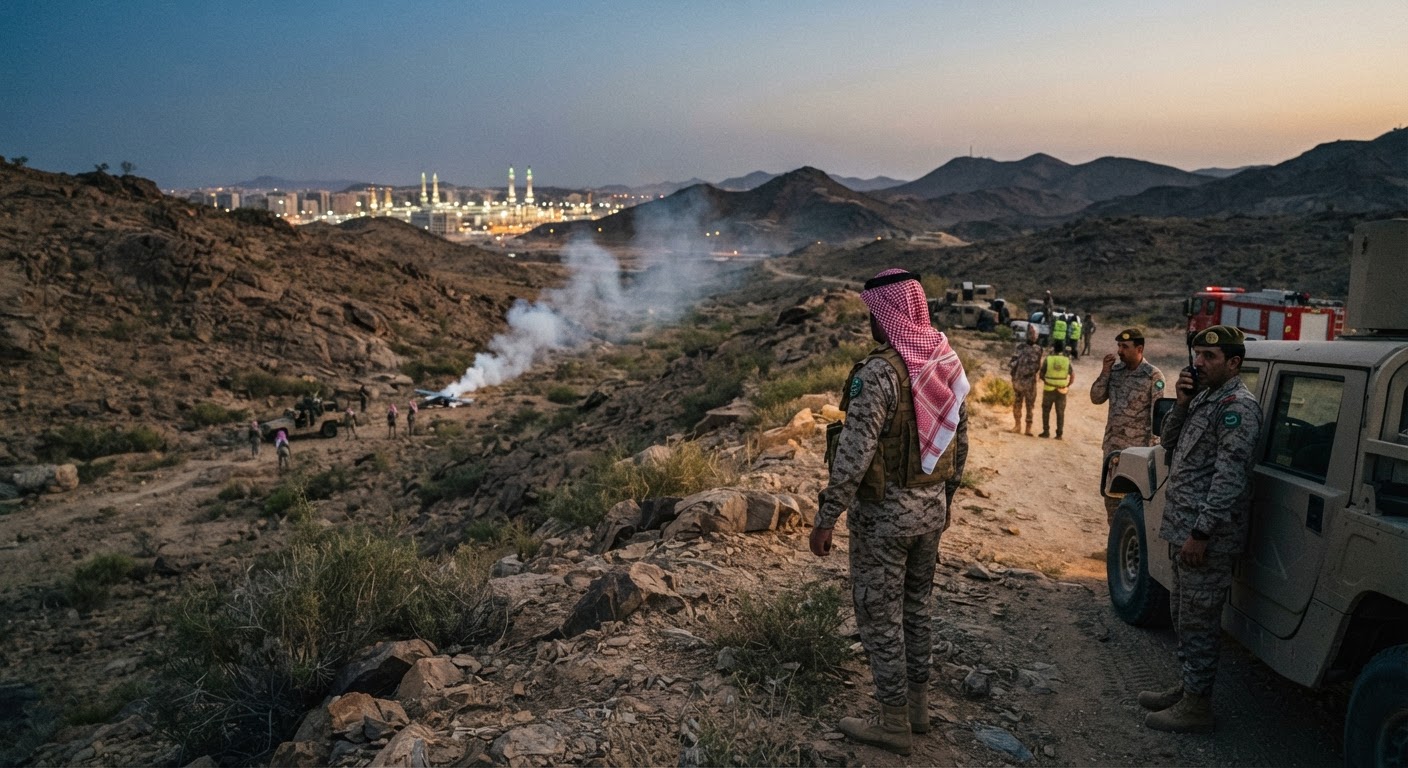
Saudi-led coalition air defenses successfully intercepted and destroyed a hostile drone south of Mecca at approximately 6:50 p.m. local time on Tuesday, September 15. The wreckage fell outside the restricted airspace of the holy city. Saudi-led coalition spokesman Maj. Gen. Turki al-Maliki described the security of the Two Holy Mosques as a red line, labeling the attempt disgraceful and vowing deterrent measures. This event marks the second such attempt against Mecca, following a July 2017 ballistic missile incident. The Organisation of Islamic Cooperation has formally condemned the act as an intolerable violation of the sanctity of holy sites.
- Saudi air defenses destroyed a drone south of Mecca on Tuesday evening.
- Houthi leadership denied targeting Mecca and claimed they downed a Saudi fighter jet.
- Civil-defense alerts were triggered and regional tensions continue to rise.
The Houthi leadership has denied targeting Mecca. Politburo member Hazem al-Assad dismissed the report as a worn-out lie, while military spokesman Yahya Saree stated that operations were focused on military and oil targets, insisting there is no threat whatsoever to the holy sites from Yemen. Additionally, Saree claimed that Houthi forces downed a Saudi F-15 fighter jet over Marib using a locally manufactured missile, a claim Riyadh has not confirmed.
Civil-defense alerts were triggered in Mecca, Jeddah, and Taif, marking the first such alerts in Mecca since 2017. Following the incident, the United States embassy advised American citizens to reconsider travel to Saudi Arabia. The incident occurs amidst heightened regional tensions; in the past week, Houthi forces have seized Mocha and Perim Island, impacting control over the Bab al-Mandab Strait. Recent attacks have included missiles and drones fired at Khamis Mushait, Abha, and Taif, resulting in 13 civilian injuries and property damage. Meanwhile, Saudi-led airstrikes have intensified across Taiz, Marib, Saada, and the Red Sea coast. Houthi health officials in Sanaa reported civilian casualties, including children, as a result of these strikes.
Economic impacts remain significant, with oil prices trading above $100 per barrel. Gulf-Iran negotiations in Oman regarding the reopening of the Strait of Hormuz have been postponed. Regional diplomatic stances remain divided: Bahrain has refused talks with Iran pending the restoration of ties, while Qatar has warned of the catastrophic implications of closing the Bab al-Mandab Strait. The conflict continues to involve complex regional dynamics, with Saudi Arabia and various Gulf states viewing the Houthis as a southern front for Iranian influence, despite Houthi claims of operating independently.