Riyadh Under Fire: Houthi Strikes and Trump’s Emergency Gulf Summit
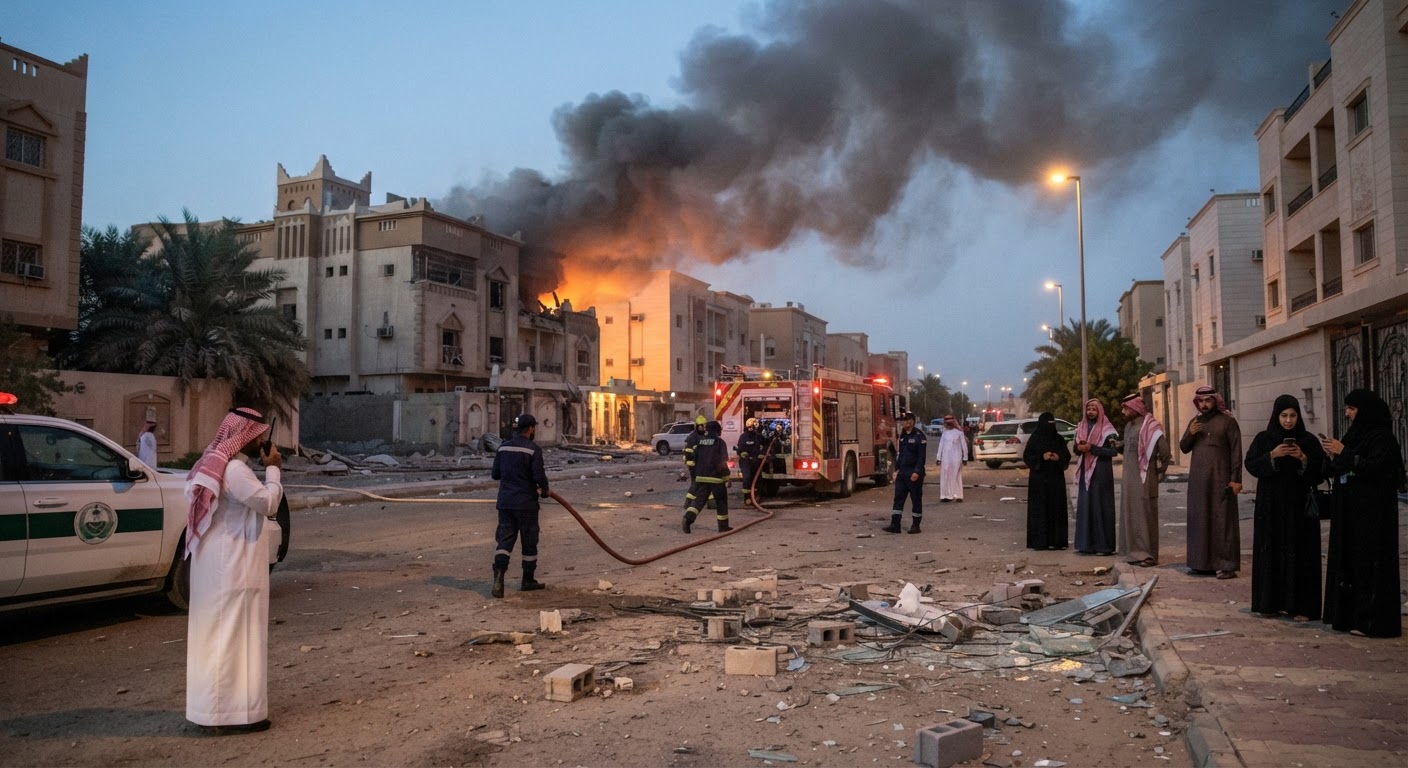
The skies over Riyadh were filled with thick, black smoke this past weekend as Iran-backed Houthi forces launched a series of missile attacks targeting the Saudi capital. This escalation marks a significant intensification of regional hostilities, occurring as the Houthi group reportedly expands its control over the Red Sea coastline, including strategic islands in the Bab al-Mandab Strait.
Chaos in the Capital and Impact on Infrastructure
While Saudi air defenses successfully intercepted a missile aimed at the city, residents reported hearing powerful explosions. A massive plume of smoke was observed rising from a fuel storage area near King Khalid International Airport, leading to significant disruptions in regional flight operations. The strikes were not limited to the capital; the group also targeted "sensitive sites" and Aramco facilities located in Yanbu.
The Houthi leadership has stated that these operations are a direct response to Saudi aerial bombardments in Sanaa and other Yemeni cities. However, Saudi officials have responded by declaring that attacks on the capital and its surrounding areas represent a crossing of a "red line."
Humanitarian Crisis and Escalation in Yemen
The conflict within Yemen has reached a devastating peak, with more than 150 fatalities reported in just the last two days. The ground situation remains volatile, characterized by:
- Prison Strikes: The Houthis claim Saudi airstrikes hit a prison in Al-Jawf, resulting in the deaths of nine detainees.
- Coastal Attacks: A strike in the port city of Mokha reportedly killed at least six people.
- Mass Displacement: Recent battles for coastal territory have caused up to 169 deaths and forced more than 130,000 Yemenis to flee their homes, with thousands crossing the Red Sea to reach Djibouti.
A Global Search for Defensive Support
As Saudi Arabia navigates a complex seven-month conflict with Iran that has already impacted the Strait of Hormuz, the Kingdom is seeking international military and defensive assistance. Saudi Arabia has requested support from several nations, leading to various offers of aid:
- The United Kingdom has offered to provide aerial refueling for Saudi aircraft.
- France has signaled its willingness to assist in the protection of critical energy infrastructure.
- Egypt and Pakistan have also been approached for defensive support.
Interestingly, the United States has avoided direct strikes against the Houthis following confidential discussions in Oman. During those talks, the group reportedly pledged to refrain from targeting American or Israeli vessels, though they notably excluded Saudi ships from this commitment.
High-Stakes Diplomacy in New York
Amidst the rising smoke and military movement, a major diplomatic effort is unfolding. On September 22, President Donald Trump is scheduled to meet with representatives from the UAE, Saudi Arabia, Qatar, Bahrain, Oman, and Kuwait on the sidelines of the UN General Assembly in New York.
The primary objectives of this summit include:
- Finding a resolution to the war with Iran.
- Reopening the vital Strait of Hormuz.
- Stopping the Houthi advance to protect essential Red Sea oil export routes.
The diplomatic landscape is further complicated by the presence of Iranian President Hassan Rouhani and Foreign Minister Mohammad Javad Zarif at the UN gathering. Qatar is currently acting as a key intermediary, conveying Iranian demands which include a comprehensive ceasefire across all fronts and the lifting of the U.S. naval blockade. Simultaneously, G7 foreign ministers have issued public calls for Iran to cease the arming of Houthi forces.
Economic Volatility on the Horizon
The convergence of the Iranian and Yemeni conflicts poses a severe threat to global energy security. With the Strait of Hormuz already under pressure and previous damage sustained by the East-West pipeline, any further interference with oil export routes could trigger extreme volatility in global markets. For expatriates living in Riyadh, Jeddah, and across the UAE, the increasing frequency of air raid alerts and flight cancellations serves as a stark reminder of the region's precarious position.