Riyadh Under Fire: Houthi Strikes and Iran’s 'Decisive War' Ultimatum
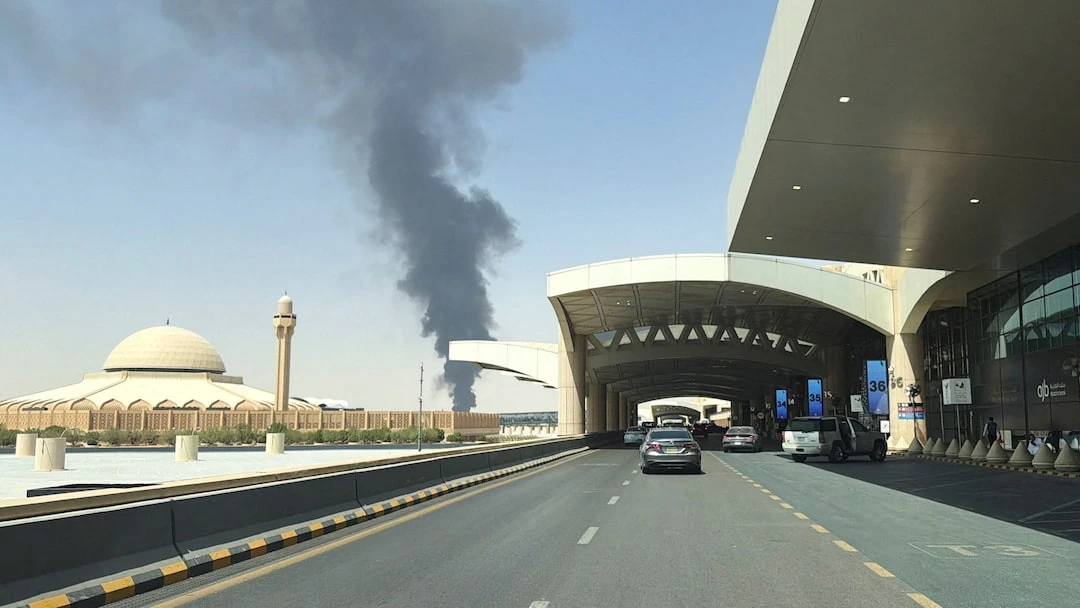
Massive plumes of smoke rose over the Saudi capital of Riyadh on 19 September 2026, as Iran-backed Houthi forces launched a coordinated barrage of missiles and drones. The strikes targeted critical infrastructure, including fuel storage tanks near King Khalid International Airport and a vital Aramco facility located in the Red Sea oil export hub of Yanbu.
While the Saudi-led coalition reported that they successfully intercepted a ballistic missile aimed at Riyadh and foiled several other attacks in Bisha, Taif, and Farasan, visual evidence from the scene told a different story. Large plumes of smoke rising from the airport fuel depot suggested that the strikes may have caused significant damage. As of now, no official casualty counts or detailed damage assessments have been released by authorities.
A Strategic Threat to Energy Corridors
The scale of the aggression marks a dangerous shift in the conflict. The Houthis have recently seized Mocha and are making tactical advancements along the Red Sea coast toward the Bab al-Mandeb strait. This movement places Saudi Arabia's essential East-West pipeline and its primary oil export capabilities under direct and immediate threat.
In response to the barrage, Riyadh has vowed to take "appropriate" action to defend its territory and infrastructure.
Iran’s Ultimatum: The Threat of 'Decisive War'
As the battlefield heats up, the diplomatic stakes have reached a breaking point. Mohsen Rezaei, the secretary of Iran's Supreme National Security Council, has issued a stern ultimatum to the United States, delivered via Qatar. Speaking through Al Jazeera, Rezaei outlined a series of non-negotiable demands to Washington, including:
- An immediate end to all wars on all fronts.
- The unfreezing of Iranian assets.
- The lifting of the U.S. naval blockade on Iranian ports.
- A cessation of the ongoing Saudi-Houthi conflict.
Rezaei issued a chilling warning, stating that failure to meet these terms would lead to a "decisive war." To bolster this stance, he noted that Iran has recently conducted testing on a new anti-ship ballistic missile.
Global and Regional Fallout
The international community is reacting with heightened concern as the risk of a wider regional conflagration grows:
- The United States: The State Department has warned that the conflict could escalate with extreme speed, advising all Americans currently in the region to exercise extreme caution. President Donald Trump has returned to the White House following a trip to Camp David, having previously declined Saudi requests for direct U.S. military intervention against the Houthis.
- Turkey: Has signaled its readiness to provide support for Saudi military requirements.
- The United Arab Emirates: Has taken a hardline stance by severing trade relations with Iran.
- The United Nations: The Security Council has formally condemned the Houthi strikes, specifically targeting civilian and energy infrastructure.
Amidst the geopolitical maneuvering and military strikes, the human cost continues to mount. The recent surge in fighting has already displaced more than 100,000 Yemenis from their homes.