Riyadh Under Fire: Houthi Missile Strike and Aramco Blaze Spark Chaos
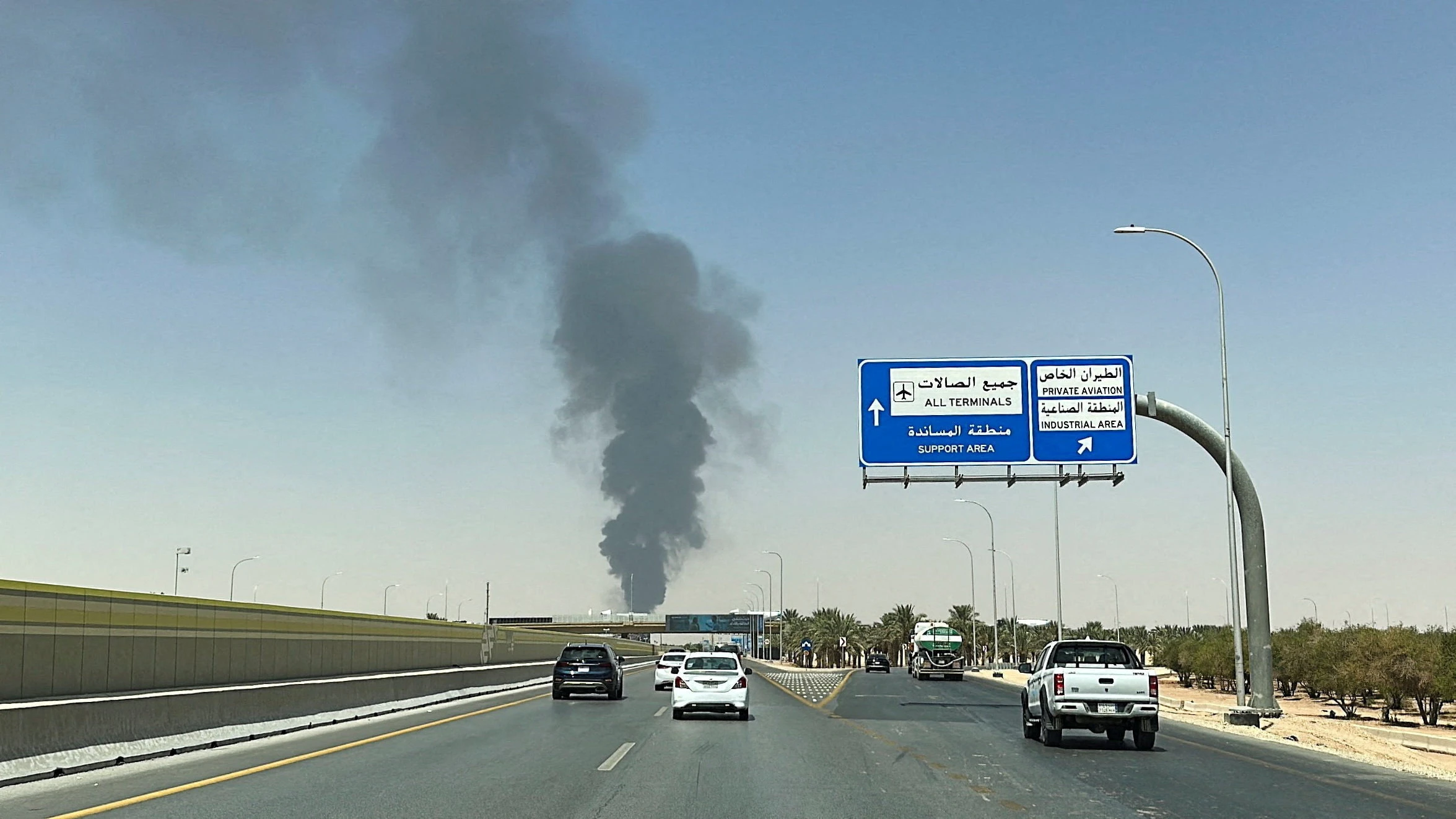
The Saudi capital was plunged into a state of high alert on Saturday, 19 September 2026, following a ballistic missile strike launched by Yemen’s Iran-aligned Houthi movement. While the Saudi-led coalition reported that air defenses successfully intercepted and destroyed the incoming weapon, the incident marked the first major air-raid alert in Riyadh since the resumption of fighting this summer.
Chaos Near King Khalid International Airport
While the missile itself was neutralized, a secondary crisis erupted near the city's main aviation hub. A massive fire broke out at an Aramco fuel storage depot located adjacent to King Khalid International Airport, sending dense columns of black smoke billowing across the Riyadh skyline.
Visual evidence from Reuters and observations by journalists on the ground confirmed intense flames near the storage tanks, with emergency crews working urgently to contain the blaze. The disruption extended to the skies, as FlightRadar24 recorded significant flight delays and cancellations throughout the period of instability.
Houthi Claims and Defensive Countermeasures
The Houthi military spokesman, Yahya Saree, officially claimed responsibility for the operation. He stated that the missile and drone strikes were specifically aimed at "sensitive sites" within Riyadh, as well as Aramco facilities located in the Red Sea export hub of Yanbu.
In response to the coordinated strikes, Coalition spokesman Maj. Gen. Turki al-Maliki confirmed that Saudi defense systems were active across multiple fronts. He noted that the systems successfully thwarted attacks targeting both civilian populations and critical infrastructure in several locations, including:
- Bisha
- Taif
- Farasan
- Yanbu
A Growing Humanitarian and Maritime Crisis
The conflict has reached a critical juncture as the Houthis have seized control of Yemen’s Red Sea coastline and various islands near the Bab al-Mandab strait. This territorial gain has allowed the group to declare a formal blockade on Saudi shipping. The human cost of this ongoing struggle is mounting, with UN reports indicating that 112,000 people have been displaced within Yemen due to the fighting.
The UN Security Council has issued a condemnation of the attacks on Saudi energy infrastructure and civilian sites, highlighting the escalating risks to global maritime security.
Diplomacy and the Path to De-escalation
Amidst a seven-month conflict involving the United States, Israel, and Iran, there are tentative signs of diplomatic movement. Iranian security chief Mohsen Rezaei informed Al Jazeera that Tehran has transmitted specific conditions to Washington via Qatar to bring the war to an end. According to Rezaei, these conditions include:
- A complete halt to fighting on all fronts.
- The unfreezing of Iranian assets.
- The lifting of the United States naval blockade.
Rezaei indicated that Iran is currently awaiting a formal response from President Trump regarding these terms.
The Role of the United States and Strategic Shifts
The geopolitical landscape remains complex. While reports suggest Saudi Arabia has sought direct military assistance from Washington to combat the Houthi threat, the U.S. has reportedly offered intelligence support instead. Furthermore, following private meetings between the U.S. and Houthi representatives in Oman, the Houthi group pledged to refrain from targeting American or Israeli vessels; however, Saudi ships were explicitly excluded from this assurance.
Due to these persistent threats and prior damage sustained by the East-West pipeline, Saudi Arabia has been forced to adapt its logistics. Saudi crude is currently being rerouted through ship-to-ship transfers off the coast of Oman to ensure continued supply.