Riyadh Targeted: Houthi Missile Strikes Spark Aramco Fire Amid Iran’s Peace Terms
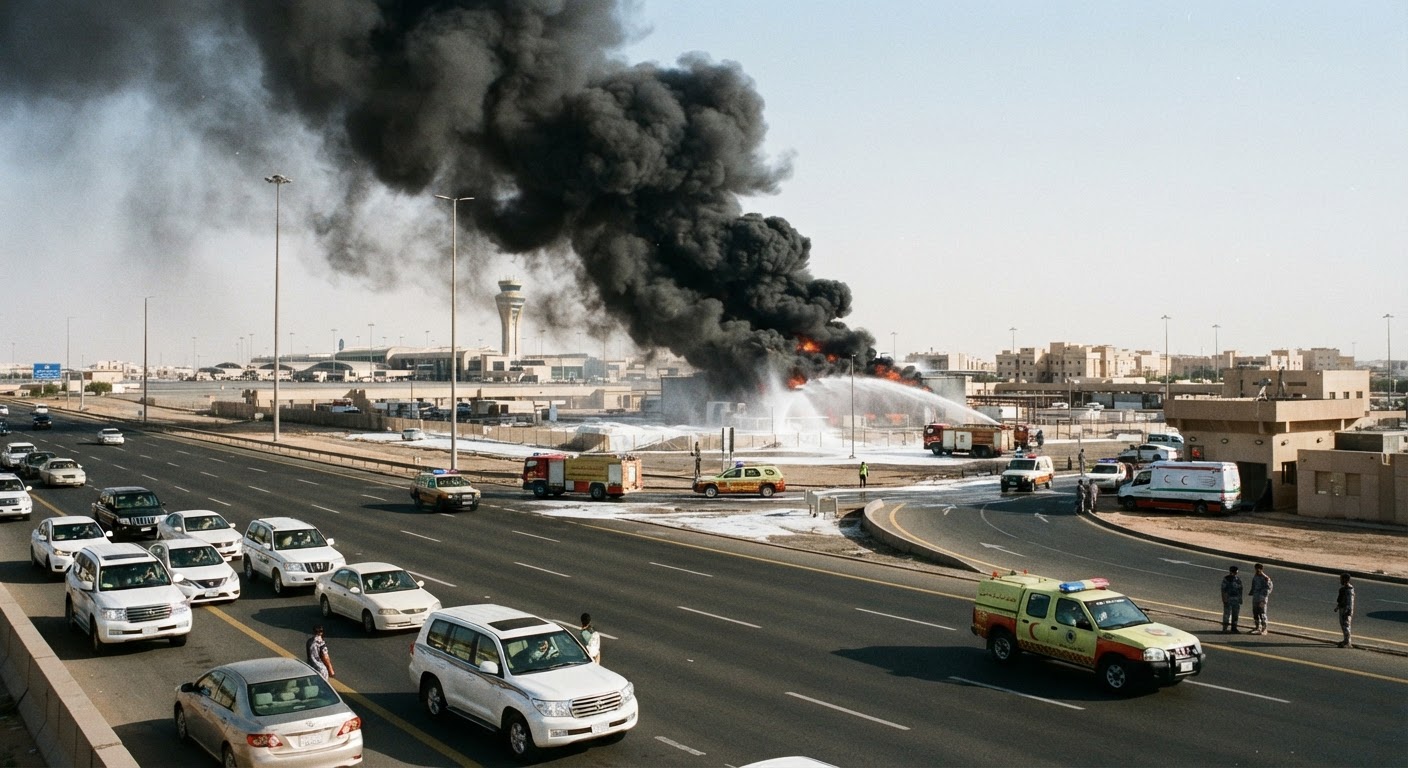
A ballistic missile strike targeting the Saudi capital of Riyadh on Saturday morning has sent shockwaves through the region, triggering a massive fire at an Aramco fuel storage facility. The strike, which occurred near King Khalid International Airport, sent thick plumes of black smoke billowing into the sky, visible from the terminal's main highway, prompting urgent emergency alerts from the Saudi Civil Defense.
Chaos in the Skies and on the Ground
While the strike caused significant disruptions to flight operations, official reports have yet to confirm any casualties. Saudi-led coalition spokesman Maj. Gen. Turki al-Malki announced that the missile heading for Riyadh was successfully intercepted and destroyed. However, the threat was widespread; the military also thwarted additional strikes aimed at Yanbu, Taif, Baish, and Farasan.
Houthi military spokesman Yahya Saree claimed responsibility for the escalation, detailing two distinct operations involving a mix of ballistic missiles, cruise missiles, and drones. According to Saree:
- One operation successfully hit sensitive locations within Riyadh.
- A second strike targeted critical Aramco infrastructure in the Red Sea hub of Yanbu.
The Houthi group described these attacks as retaliation for Saudi airstrikes in Yemen, which followed the militia's recent seizure of the Mocha port and islands near the Bab al-Mandab strait.
Threat to Global Oil and US Warnings
The escalation poses a severe threat to Saudi crude oil export routes. These maritime paths have become increasingly vital as Iranian control over the Strait of Hormuz complicates global energy security. In response to the rising volatility, the U.S. State Department issued a stern warning, suggesting that the conflict could escalate rapidly and advising American citizens to reconsider their travel plans throughout the Middle East.
The geopolitical tension arrives amidst high-level political shifts, as President Donald Trump returned to the White House after cutting short a weekend at Camp David.
Iran’s Peace Proposal via Qatar
As missiles fall, a diplomatic maneuver is unfolding in the background. Mohsen Rezaei, secretary of Iran's Supreme National Security Council, revealed that Tehran has submitted specific conditions to end the war. These terms were delivered to Washington through Qatari mediators. The proposed framework includes:
- A comprehensive ceasefire.
- The release of frozen Iranian assets.
- The lifting of the U.S. naval blockade on Iranian ports.
Despite these overtures, Rezaei maintained a hardline stance, noting that Iran has recently tested a new anti-ship ballistic missile and remains prepared for a "decisive conflict" should negotiations fail.
A Divided Region
This incident marks a significant escalation, representing the first time in the current round of fighting that the Iran-backed militia has targeted the Saudi capital. The strike has deepened regional rifts: the UAE has strongly condemned the Houthi attempts to strike near Mecca, while Bahrain has reiterated its refusal to engage with Tehran. Meanwhile, Qatar continues to act as a mediator, as Saudi Arabia and the UAE call for a unified Gulf stance against the mounting security threats.