Red Sea Crisis: Houthis Seize Vital Coastline as Gulf Conflict Intensifies
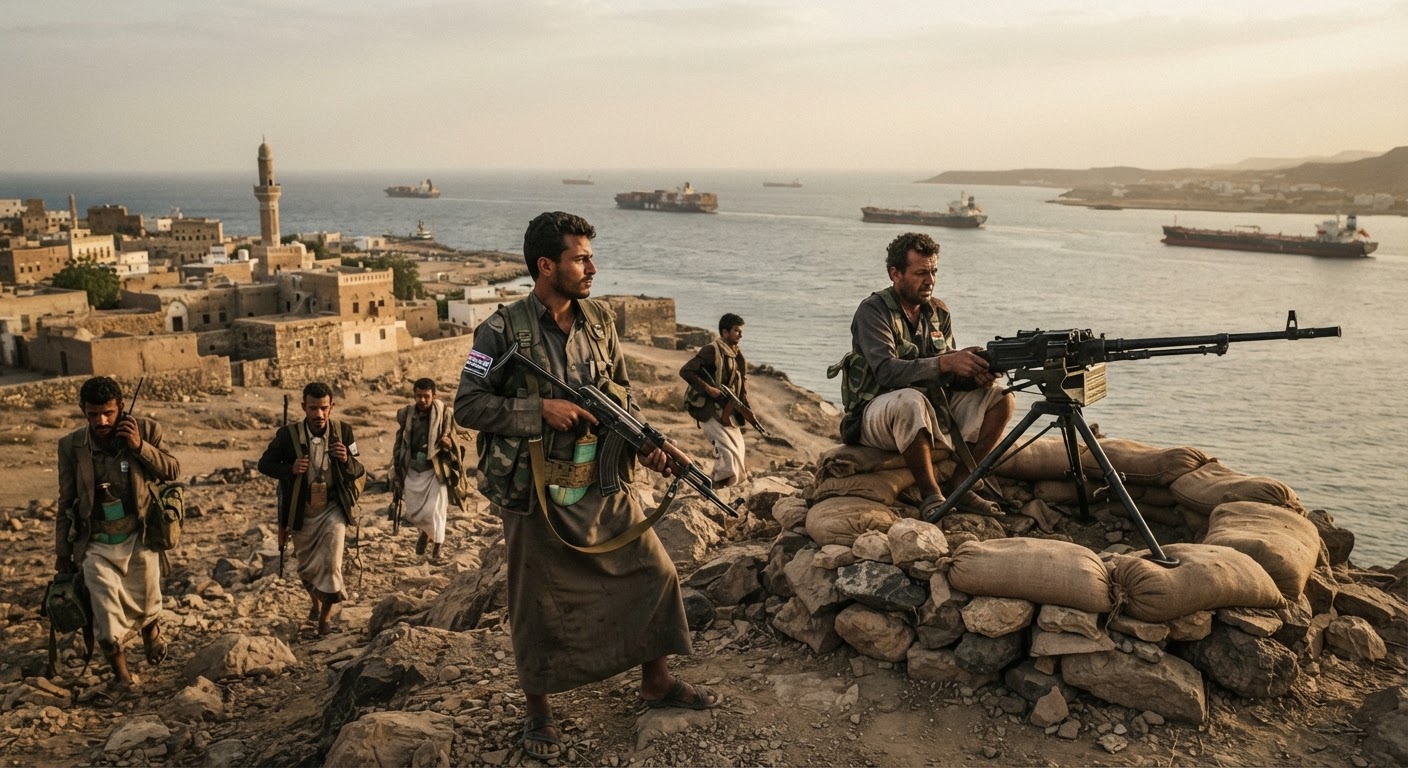
The geopolitical landscape of the Middle East has shifted dramatically following a lightning offensive by Iran-backed Houthi forces. By seizing Yemen’s critical Red Sea coast, the group has secured control over the port of Mokha and several key islands, including Perim (Mayun) and the Hanish islands.
This territorial gain places the Bab al-Mandeb strait—the world's second most vital energy chokepoint after the Strait of Hormuz—firmly within Houthi influence, heightening fears of a massive disruption to global energy flows.
A Growing Humanitarian and Regional Toll
The escalation has brought immediate and devastating consequences to both Yemen and its neighbors. In the last 48 hours alone, intense fighting across the regions of Taiz, Al-Jawf, Marib, and Saada has claimed at least 154 lives, according to sources cited by AFP.
- Civilian Casualties: Saudi-led airstrikes targeting Mokha in response to Houthi advancements reportedly killed six civilians, including two children and a woman, while wounding eight others.
- Mass Displacement: The United Nations has issued a stark warning, stating that the ongoing violence could displace more than 230,000 people within Yemen, with an additional 10,000 expected to flee across the Red Sea to Djibouti.
Saudi Arabia Under Direct Threat
The conflict has spilled over significantly into Saudi Arabia. Houthi missile and drone attacks have targeted the capital region of Riyadh and Aramco facilities in Yanbu. The security situation has forced major operational changes within the Kingdom:
- The East-West pipeline has been shut down following drone attacks attributed to Iran-linked groups in Iraq.
- Mass alerts have been issued across various regions.
- Airports in Jazan, Abha, and Najran have faced repeated closures due to the threat level.
High-Stakes Diplomacy and Military Hesitation
As the conflict intensifies, the international community is scrambling to find a resolution. Yemeni President Rashad al-Alimi has formally requested military assistance from U.S. President Donald Trump, though no commitment has been made. Meanwhile, Saudi Crown Prince Mohammed bin Salman has urged Washington to take direct military action against the Houthis.
While U.S. aircraft were reportedly prepared and targets approved, President Trump has paused the operation, choosing to prioritize the management of the broader war with Iran. This delicate balancing act continues at the UN General Assembly in New York, where Iranian President Masoud Pezeshkian and Foreign Minister Abbas Araghchi are currently present.
The Iranian Revolutionary Guard has issued a stern warning, threatening to "change the geography of the war" should the United States escalate its involvement.
Despite the tension, there are signs of potential dialogue. President Trump has indicated he is "probably open" to meeting with Pezeshkian. Additionally, mediators in Qatar and Oman suggest that Iran may be willing to reopen the Strait of Hormuz within seven days if U.S. military pressure is reduced.