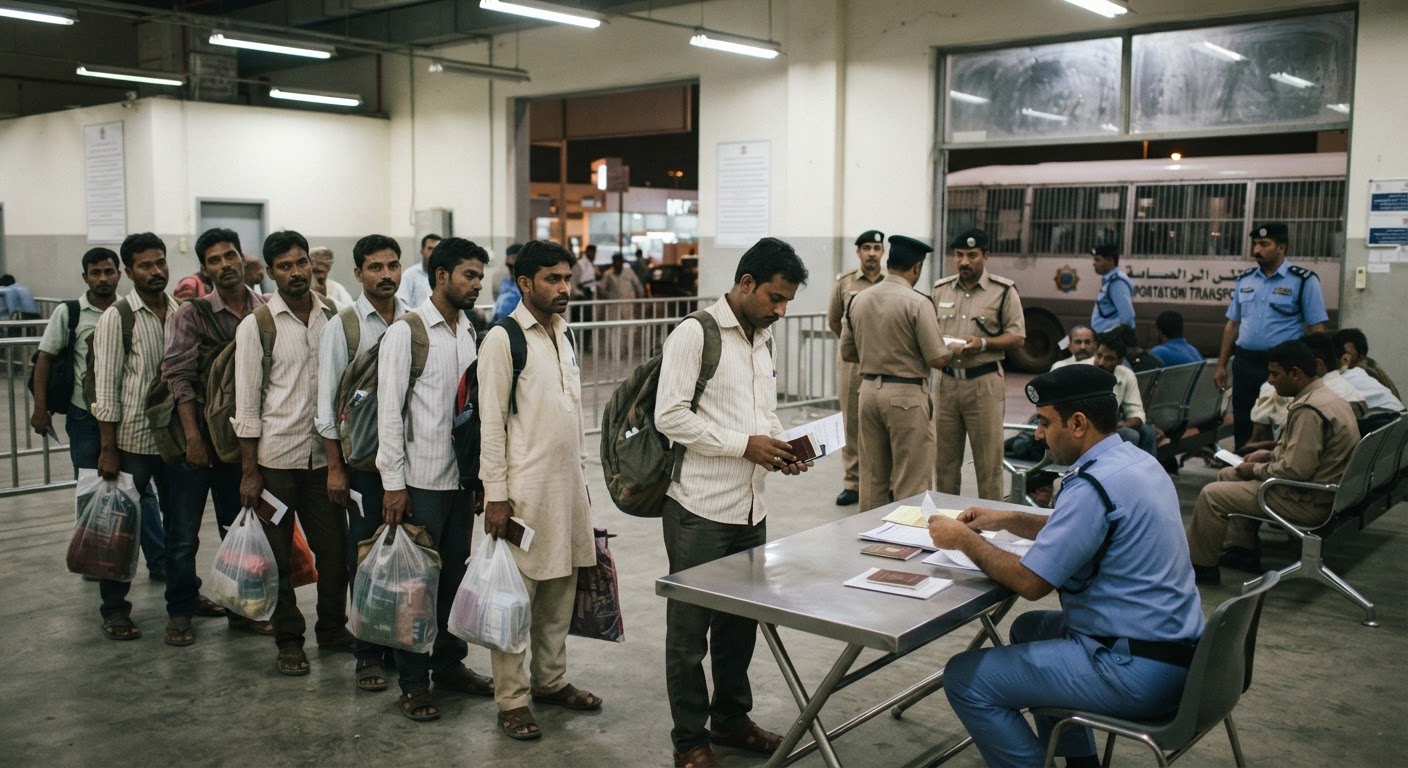
Discover how Oman found 11,172 worker rule breaks and sent home 2,944 people in early 2026. Here are the key facts from the recent report by the Ministry of Labour.
- 11,172 non-Omani workers found breaking rules in 6,707 checks.
- 4,680 cases sent to the Public Prosecution and 2,944 workers deported.
- OMR 3.246 million collected in total fines with a 69.5 percent compliance rate.
Muscat, August 28, 2026: The Omani Ministry of Labour has released inspection results for the first half of 2026, revealing that 11,172 non-Omani workers were found in violation of labour regulations during 6,707 inspections. Of these, 4,680 cases were referred to the Public Prosecution, and
2,944 workers were deported following enforcement procedures. The inspections resulted in fines exceeding
OMR 3.246 million, with an overall labour market compliance rate of 69.5%. Authorities are conducting ground-level verifications of work-permit status, authorised employers, approved occupations, and labour deployment. This development is significant for the Indian community in Oman. According to updated bilateral information from the Embassy of India in Muscat in August 2026, approximately 674,950 Indians reside in Oman. NCSI data from May 2026 indicates that 526,496 Indian nationals are on work visas. While the Ministry has not released a nationality-wise breakdown of the violations, adherence to compliance rules is critical.
Under Article 28 of the Oman Labour Law (Royal Decree 53/2023), non-Omani workers must possess a valid work permit before beginning employment. This requires legal entry, medical fitness, and a contract with an authorised employer. Working on a visit or tourist visa is considered unsafe. Additionally, Article 29 prohibits workers from shifting to another employer without formal electronic notification and authorisation from the Ministry of Labour. Unauthorized work for secondary employers, including during weekends or off-hours, is subject to penalties regardless of residence card status. Occupational compliance is also strictly monitored; workers must perform duties consistent with their labour card designation to avoid legal risks for both the employee and the employer. While 272 employment opportunities were registered through settlement decisions, underscoring potential paths for regularisation, the Ministry's enforcement scale remains high.
Indian workers are advised to verify the authenticity of contracts and employers before arrival. This includes ensuring salary, duty hours, accommodation, and medical coverage are clearly defined. Workers should avoid arrangements involving cash payments to unauthorised middlemen or promises of work visas after arrival on visit visas. Post-arrival, workers should confirm their status in the Ministry's system and maintain records of their contract, passport, residence card, and salary receipts. Any change in employment must follow official transfer procedures to avoid legal consequences.