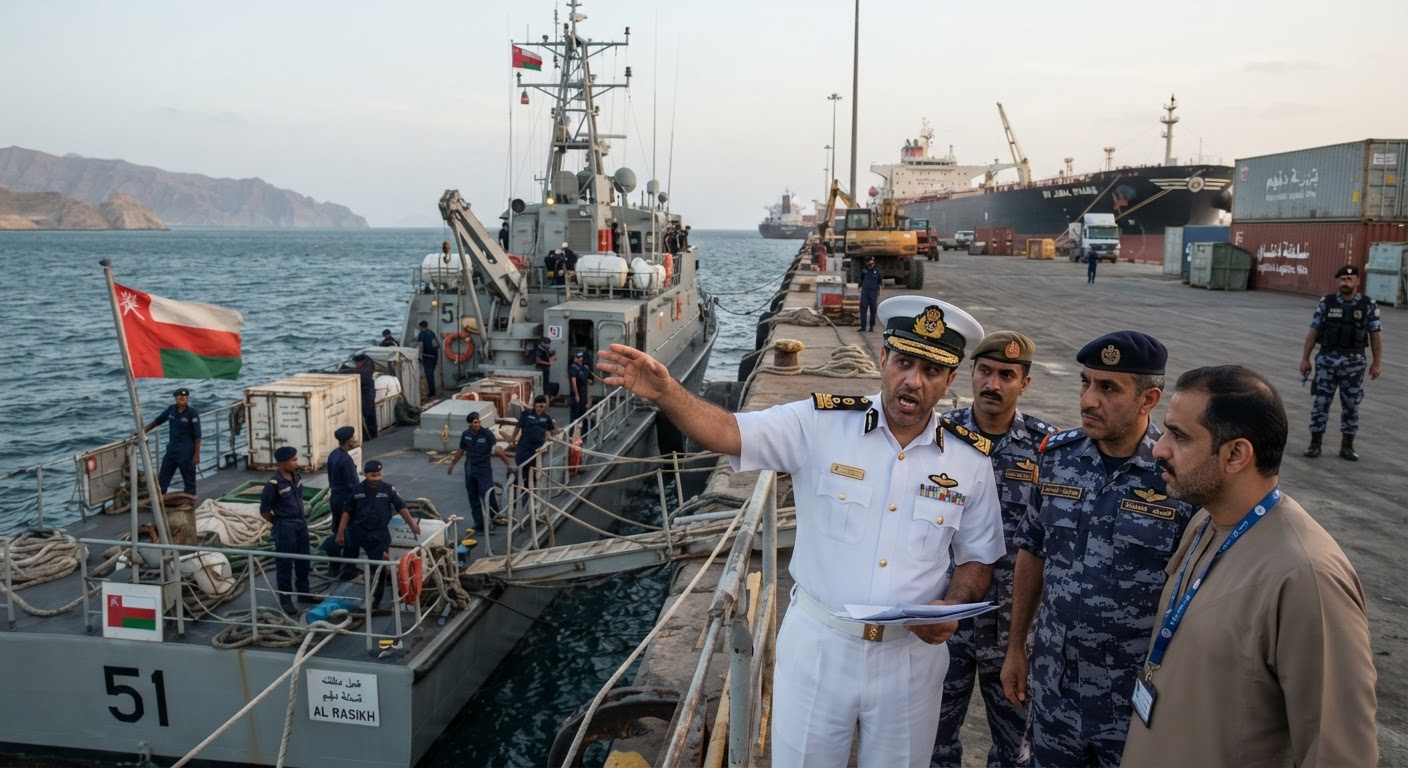
Oman officially postponed a scheduled meeting between Gulf foreign ministers and Iranian officials late Sunday as diplomatic efforts to secure the Strait of Hormuz collapsed. Omani Foreign Minister Sayyid Badr Albusaidi stated the gathering was postponed in the interest of consensus, as the regional security situation deteriorated significantly. The summit was intended to address the closure of the world’s most critical oil choke point, with Iran planning to propose a temporary shipping corridor under its oversight—a proposal rejected by Washington and several Gulf nations.
- Oman postpones the Gulf-Iran summit to maintain regional consensus.
- Iran planned to propose a temporary shipping corridor under its oversight, which Washington and Gulf nations rejected.
- The UKMTO reported a projectile strike on a vessel in the Strait of Hormuz on Sunday.
The regional crisis intensified after Iranian-backed Houthis seized the Red Sea port of Mokha and Perim Island in the Bab el-Mandeb last week, effectively challenging the internationally recognized Yemeni government. Simultaneously, Saudi Arabia shuttered its 1,200-km East-West crude pipeline following drone strikes on Friday, which Baghdad and Riyadh attributed to Iranian-aligned militias in Iraq. On Sunday, the
United Kingdom Maritime Trade Operations (UKMTO) reported a projectile strike on a vessel in the Strait of Hormuz, while an Iranian commercial ship was also struck off the coast of Iran, resulting in one death and four injuries. Bahrain, which hosts the US Fifth Fleet, formally refused to attend the summit, citing that security cannot be achieved through appeasement and demanding unconditional navigation rights. This follows a period of heightened conflict since February 28, during which GCC capitals have been targeted by missiles and drones.
Despite the regional tension, a high-level meeting occurred on September 12 between Abu Dhabi Crown Prince Sheikh Khaled bin Mohamed bin Zayed Al Nahyan and Iranian President Masoud Pezeshkian on the sidelines of the BRICS summit in India, where both sides expressed a desire to improve relations. However, the UAE continues to maintain trade and financial restrictions against Iran. Saudi Arabia, whose Foreign Minister Faisal bin Farhan had been expected to participate in the Omani summit, has remained cautious while facing ongoing Houthi strikes in Abha, Khamis Mushait, Jazan, and Najran. Markets remain volatile as investors monitor the status of the Saudi East-West pipeline, potential further Iranian escalation, and the prospect of a rescheduled ministerial meeting. Since the conflict began on February 28,
every Gulf Cooperation Council (GCC) state has experienced direct attacks, and the strategic importance of the Strait of Hormuz and the Bab el-Mandeb remains at the center of the ongoing geopolitical standoff.