Two Oil Tankers Attacked Off Saudi Coast; Crews Evacuated
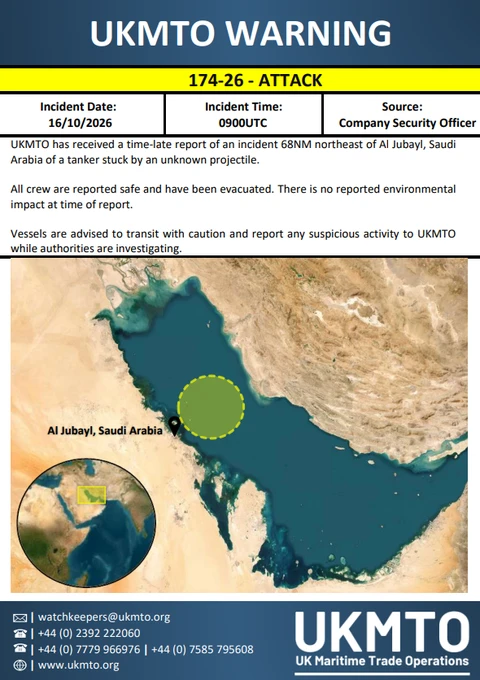
Two separate maritime attacks targeting oil tankers near the coast of Saudi Arabia, close to Jubail, have triggered emergency evacuations and caused significant instability in global energy markets. The incidents, confirmed by the United Kingdom Maritime Trade Operations (UKMTO), have heightened fears regarding the safety of critical shipping lanes in the region.
Details of the Maritime Strikes
The attacks occurred in two distinct locations northeast of the Al Jubail area. According to maritime reports, the first vessel was struck by an unidentified projectile approximately 68 nautical miles northeast of the coast. While the crew was successfully evacuated, no environmental damage was reported following the strike.
The second incident was more violent, involving a vessel located 78 nautical miles northeast of Al Jubail. This tanker was struck by a rocket-propelled grenade (RPG) launched from a small boat, resulting in damage to its aft port quarter.
ST3 Tanker Hit by Rocket-Propelled Grenade
Maritime security firm Vanguard identified one of the targeted vessels as the Marshall Islands-flagged crude oil tanker ST3, also known as Safeen Principal. The attack on the ST3 caused severe operational failures, including a total power outage and a fire within the engine room.
The safety of the crew remains a primary concern, but relief has arrived for those on board:
- The vessel's crew included 15 Indian nationals.
- All 15 Indian seafarers were safely transferred to a UAE-flagged container ship.
- Indian officials have officially confirmed that all crew members are safe.
Rising Tensions in the Strait of Hormuz
These maritime strikes are part of a dangerous surge in attacks near the Strait of Hormuz, a vital transit route responsible for 20% of the world's oil and gas supplies. The escalation has had immediate economic consequences, driving oil prices to multi-month highs and increasing maritime insurance costs.
The security situation is further complicated by broader regional instability. On October 14, two cargo vessels were sunk, marking the first confirmed sinkings in the region since March. While Iranian officials have suggested these tactics are designed to maintain high oil prices and pressure the United States, the Houthi-led attacks have drawn condemnation from the UN Security Council.
Impact on Saudi Infrastructure
The maritime insecurity coincides with a period of intense aerial threats against Saudi Arabia. King Khalid International Airport in Riyadh has been the target of more than 20 strikes this month alone. These attacks have resulted in:
- 17 fatalities.
- Over 330 injuries.
- The airport is expected to remain closed until at least October 17.
As the Saudi-led coalition continues to work on intercepting incoming threats, the increased risk to both maritime and domestic infrastructure continues to disrupt regional flight schedules and global energy security.