'Never Bowing': Iran Defies US Threats as Regional Conflict Ignites
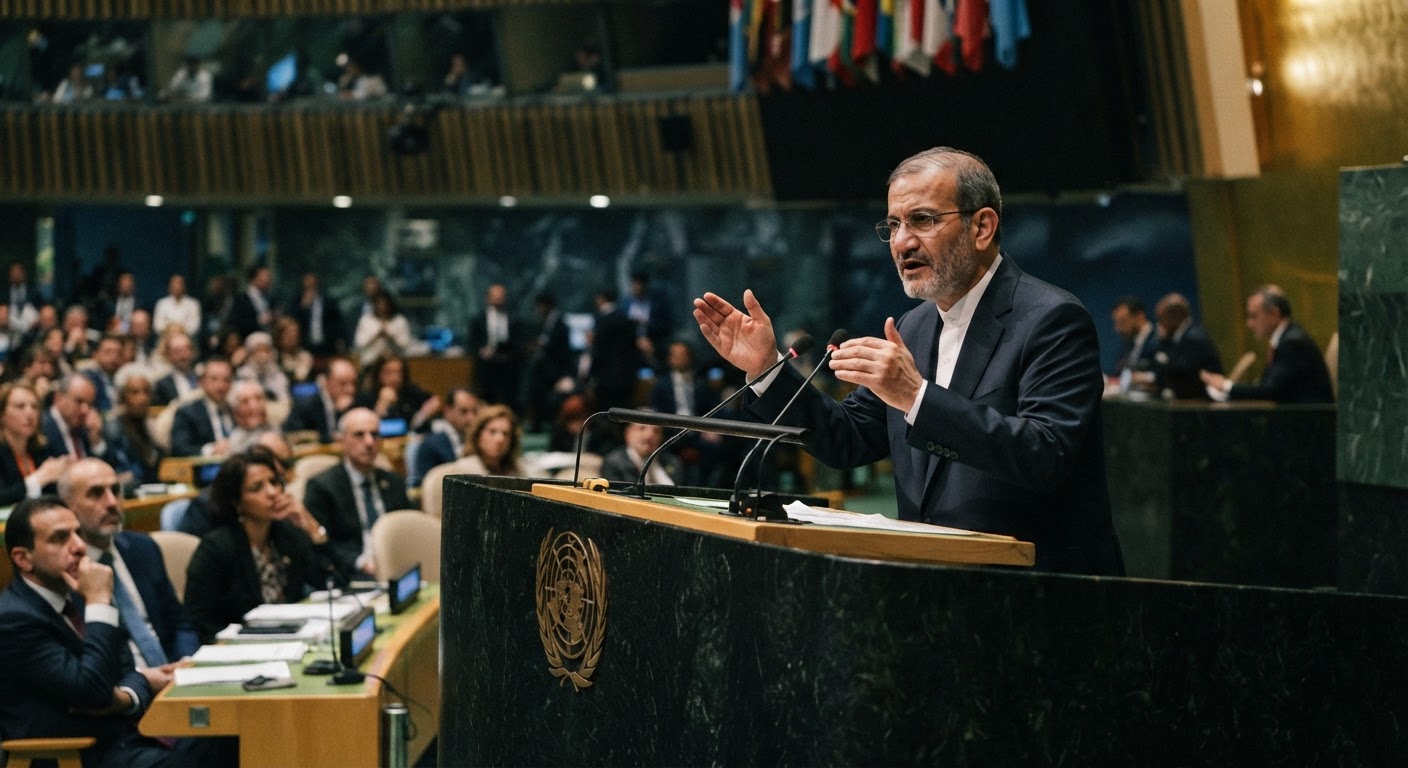
In a high-stakes confrontation at the 81st UN General Assembly in New York, Iranian President Masoud Pezeshkian issued a stern warning to the international community, vowing that his nation would refuse to yield to external pressures. His address, delivered on 23 September 2026, came at a moment of extreme volatility, following direct threats of "annihilation" from U.S. President Donald Trump.
A Defiant Stance on the Global Stage
President Pezeshkian used his platform to reject the aggressive rhetoric coming from Washington, declaring that Iran would "never bow our head or bend at the knee." In a move designed to highlight what he termed the "victimization" of the Iranian people by terrorism, the President displayed poignant photographs of the late Supreme Leader Ali Khamenei alongside images of deceased schoolchildren.
The tension in the assembly hall was palpable, resulting in the U.S. delegation walking out during the speech. This diplomatic rupture follows a day of intense friction, occurring just 24 hours after President Trump threatened to destroy the Islamic Republic if a deal is not reached. While informal shuttle talks between U.S. and Iranian envoys took place on the sidelines, no concrete progress has been made regarding naval blockades or restrictions on Iran's missile and proxy activities.
Maritime and Aviation Disruptions
The geopolitical standoff is moving beyond the halls of the UN and into critical transit corridors. Pezeshkian specifically warned against the ongoing denial of Iranian access to the Strait of Hormuz, arguing that the vital waterway cannot function as a one-way street that excludes Iran.
The conflict, which has persisted for seven months following U.S.-Israeli strikes in February, is now causing significant economic ripples:
- Aviation Sanctions: New U.S. aviation sanctions, which went into effect on 23 September, are already disrupting flight paths across the Gulf.
- Regional Hubs at Risk: Routes to Muscat, Doha, and Baghdad are facing direct impact.
- Financial Threats: Any entities found servicing Iranian carriers face the severe risk of being removed from the global dollar system.
Chaos in Yemen
As diplomatic tensions rise, the ground war in Yemen is reaching a fever pitch. Houthi media has reported significant Saudi airstrikes in Hodeidah and Taiz, while a Saudi Wing Loong II drone was reportedly downed near Mocha.
The human cost of the escalating violence is staggering. Recent reports indicate:
- Casualties: 169 people have been killed in the fighting for the Kahboub heights over the last three days.
- Displacement: More than 130,000 Yemenis have been forced to flee their homes.
- Energy Infrastructure: Houthi attacks on Riyadh and regional energy targets have forced Saudi Arabia to operate its East-West pipeline at a reduced capacity.
A Region Divided
The ongoing crisis has forced neighboring states to take sharply different diplomatic and military paths, creating a complex web of regional involvement:
While Iran maintains it seeks only nuclear energy and remains open to diplomacy, the regional response remains deeply fractured.
- UAE: Has taken a hardline stance by severing all trade with Tehran.
- Saudi Arabia: Has resumed active hostilities against Houthi forces.
- Oman: Is attempting to act as a mediator, even as it faces direct attacks.
- Qatar: Continues to serve as a critical diplomatic go-between.
- Bahrain: Has declined any form of diplomatic engagement regarding the matter.
For the millions of expatriates living across the Gulf, the lack of movement regarding naval blockades and regional security suggests that the period of uncertainty is far from over.