Kuwait Targets Private School Data in Major Sweep of Irregular Residents
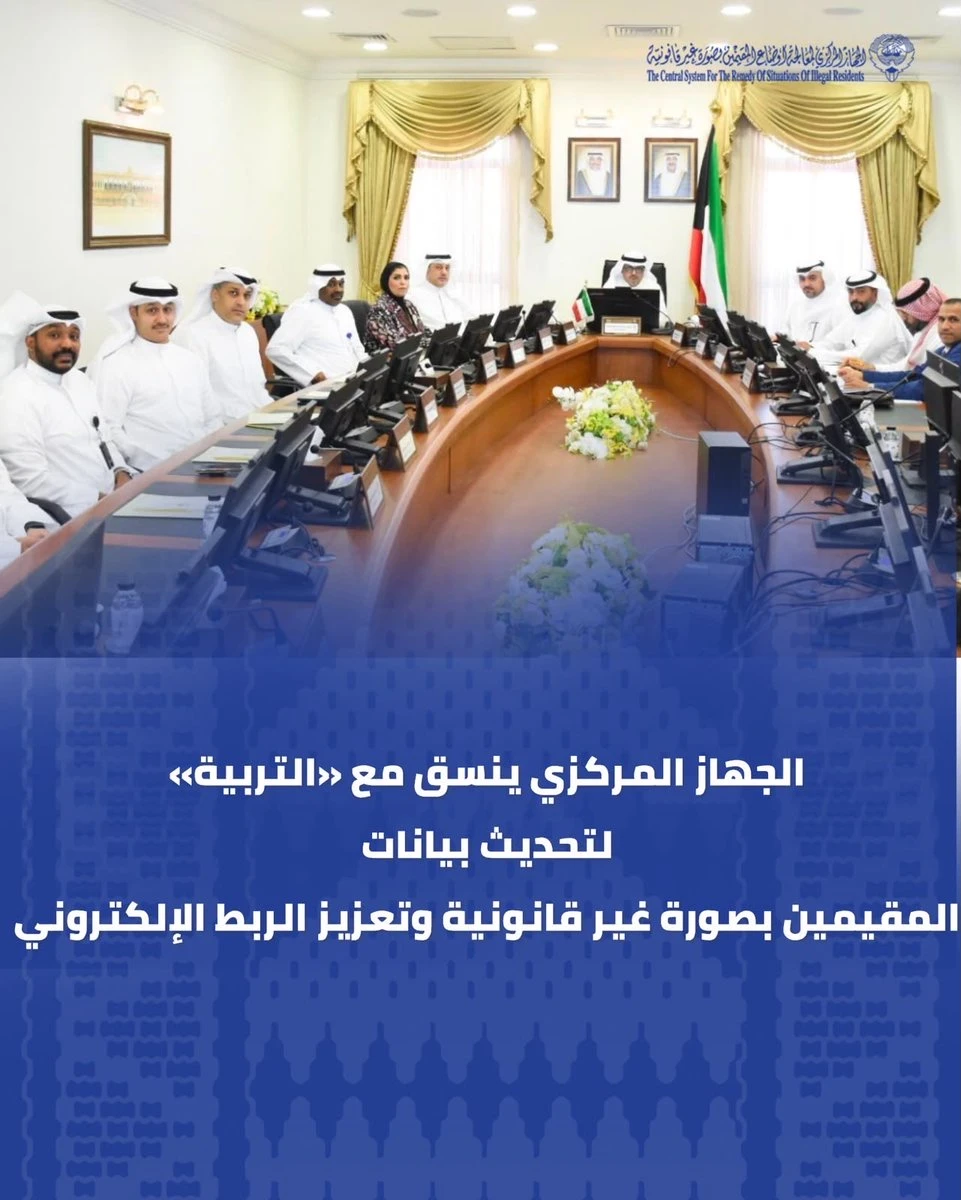
Kuwait is intensifying its efforts to regulate the status of individuals living in the country without legal residency, with a new focus on the education sector. A high-level coordination meeting was held on 17 September 2026 between the Central Agency for Addressing the Status of Illegal Residents (CARIRS) and the Ministry of Education’s Private Education Sector to initiate a systematic update of records for individuals without legal residency, specifically focusing on children enrolled in private schools.
Digital Integration and Enhanced Oversight
The initiative aims to bridge the gap between residency enforcement and educational administration through enhanced electronic connectivity. The CARIRS delegation, led by Assistant Secretary-General for Executive Affairs, Brig. Gen. Suleiman Al-Hussainan, and Assistant Secretary-General for Technical Affairs and Information, Abdullah Al-Farhan, met with the Ministry’s Private Education Department Director, Abdullah Al-Duaijani, to discuss several critical pillars:
- Data Exchange: Establishing stronger electronic connectivity for seamless data sharing between the two agencies.
- Record Management: Implementing mechanisms to organize and track the records of irregular residents within the national educational system.
- Government Control: Implementing tighter controls on government-related services to ensure compliance.
Implications for Teachers and School Staff
This digital overhaul follows a significant restructuring within the teaching workforce. Recently, 7,019 expatriate teachers—comprising 1,551 men and 5,468 women—were terminated via the Sahel app. These cuts targeted surplus specializations, such as physical education and Islamic studies, and are projected to save the state approximately KD 42 million annually.
Under the new CARIRS-Education digital integration, school HR systems will be able to directly identify teachers who face issues with their civil IDs or possess irregular residency status. This ensures that the workforce aligns strictly with legal residency requirements.
The Scale of the Audit
The scope of this crackdown is substantial, given the number of students currently enrolled in the system. While 2021 data from CARIRS showed 33,700 students classified as illegal residents or Bidun (with 13,327 in private schools), more recent UN CERD 2026 records suggest that approximately 35,000 children of irregular residents are currently enrolled.
Experts warn that a comprehensive data clean-up across private systems could lead to significant disruptions, including:
- Challenges with student admissions.
- Complications during exam registrations.
- Issues regarding fee exemptions.
Risks for Private Schools and Families
Private schools, particularly those serving large Indian, Pakistani, Egyptian, and Syrian communities, are expected to undergo rigorous record audits. Schools that fail to reconcile the identities of their students and parents with official records risk facing:
- Delays in the renewal of their operating licenses.
- Registration blocks for the upcoming 2026/27 academic year.
In a related move, the Ministry of Education has opened online registration until 21 September for teaching and administrative positions at adult-education and literacy centers, as the ministry manages an identified surplus of 33,268 teachers across several specializations.
With approximately 85,000 people identified as illegal residents in Kuwait, families are strongly advised to proactively verify their file statuses with school registrars. It is essential to maintain all official documentation, including original IDs and any correspondence from CARIRS.
For official inquiries, individuals can contact [email protected] or reach out via the agency's X handle, @carirs_gov_kw.