IRGC Closes Strait of Hormuz After Tanker Explosions; Oil Surges
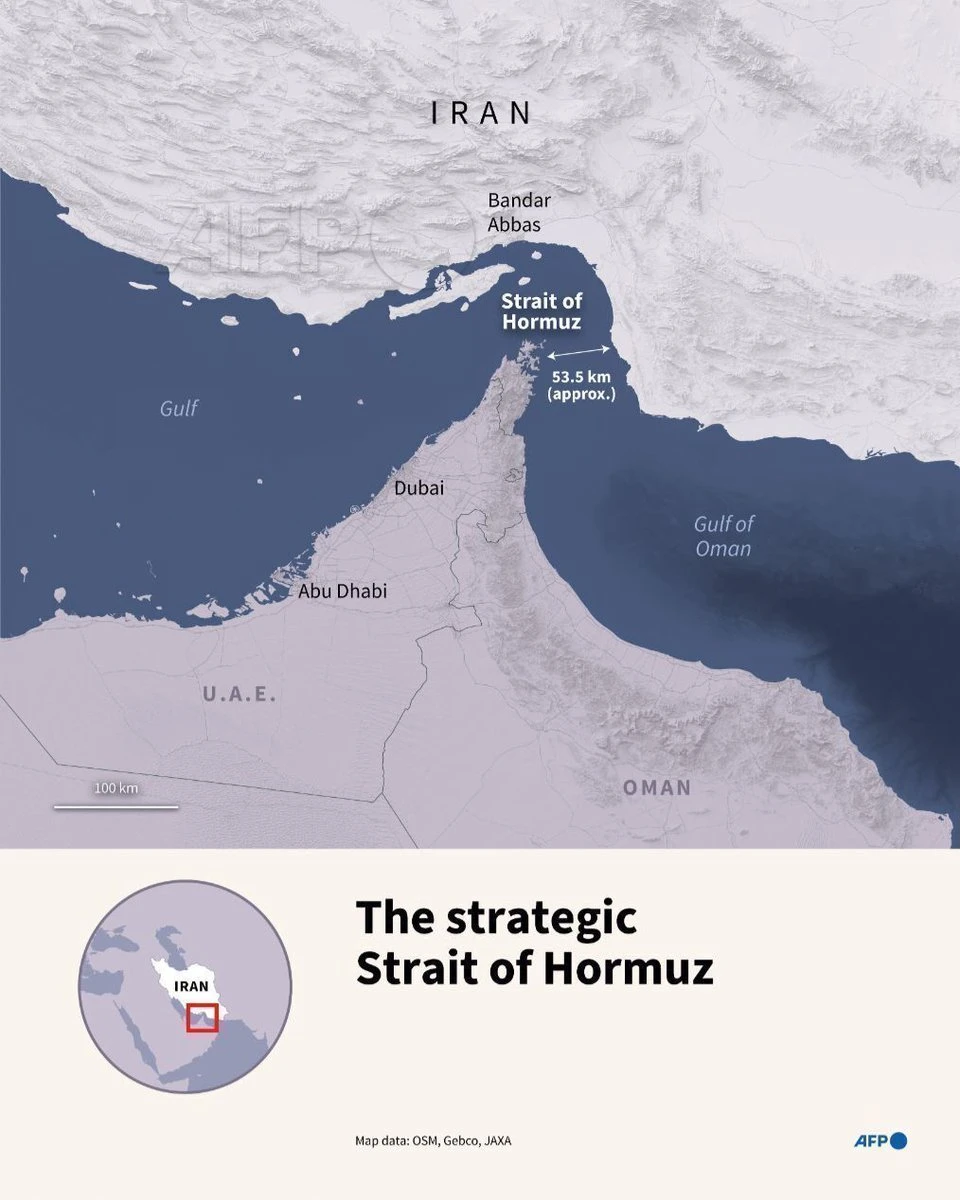
The Islamic Revolutionary Guard Corps (IRGC) Navy has officially declared the Strait of Hormuz closed to all vessels, regardless of their nationality. This sudden maritime blockade follows reports of two supertankers, each carrying more than two million barrels of crude oil, erupting in flames after striking naval mines.
Naval Blockade and Escalating Maritime Attacks
Iranian state media and the IRGC alleged that the affected vessels had disabled their tracking systems and were attempting to transit the area with support from the United States military. The IRGC has claimed full operational control over the waters east of Hormuz, the Arabian Sea, and the Gulf of Oman, mandating that all transit must now be coordinated directly with Iranian forces.
The UK Maritime Trade Operations (UKMTO) has documented further strikes in the region, including a tanker targeted by a Rocket-Propelled Grenade (RPG) fired from a small boat. Additional incidents have been reported off the coast of Al Jubail, Saudi Arabia, and near Al Mukalla, Yemen, where gunmen opened fire on a fifth vessel.
This surge in maritime violence comes as ship attacks near Hormuz reach record levels, with up to a dozen vessels struck in recent weeks. Commercial traffic has plummeted to as low as 2% of normal levels. Consequently, daily oil flows through the strait have dropped from a pre-war average of 17 million barrels to between 9 and 12 million barrels.
The blockade, which has been effectively in place for over 230 days, has seen two cargo ships sink recently—marking the first such confirmed losses since March. Iranian officials stated that these aggressive tactics are intended to exert maximum pressure on Washington ahead of the November 3 US midterm elections.
Global Economic Impact and Oil Price Spikes
The ongoing conflict, part of a larger war between the US, Israel, and Iran that commenced on February 28, 2026, has sent global energy markets into a tailspin. Brent crude prices touched $110 during trading on October 17, representing a massive 50% increase from the pre-war level of $72. WTI crude has also surged, hitting $101.41.
As Iran continues to target critical energy and transport infrastructure across GCC states—including Saudi Arabia, the UAE, Qatar, Bahrain, Oman, and Kuwait—the economic repercussions are widespread. Gulf exporters are facing significantly higher costs due to the necessity of rerouting shipments via the Red Sea or utilizing ship-to-ship transfers. Furthermore, war-risk insurance premiums have become prohibitively expensive.
The instability also places immense pressure on the regional workforce. Millions of Indian, Pakistani, Bangladeshi, and Filipino nationals living in the Gulf are facing heightened security risks and rapidly increasing living costs.
Houthi Escalation in Saudi Arabia and Yemen
In a separate escalation, Houthi forces in Yemen have intensified their attacks on Saudi Arabia. Since October 1, approximately 20 strikes have been launched against King Khalid International Airport in Riyadh. These attacks have resulted in over 330 injuries and 17 fatalities, including Indian, Bangladeshi, Pakistani, and American citizens.
The airport in Riyadh remains closed until 21:00 UTC on October 17. Beyond the Saudi border, Houthi strikes have also targeted the presidential palace in Aden and Aden airport, resulting in five deaths. Meanwhile, heavy fighting continues near Taiz, which is severely hindering the delivery of humanitarian aid.
While Saudi Arabia and the UAE continue to work to intercept these threats, regional partners including Egypt and France have mobilized support. Amidst the chaos, Oman is currently attempting to mediate between the conflicting parties to find a diplomatic resolution.