768 Indian Seafarers Stranded in Gulf After Fatal Tanker Attack
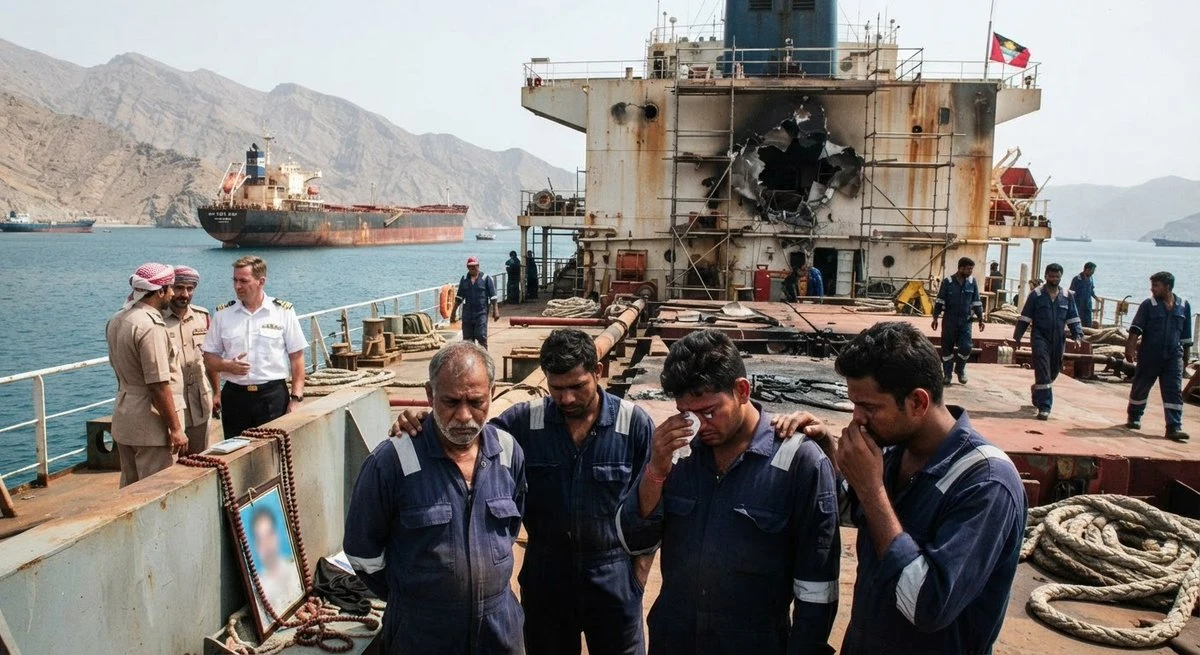
A maritime security crisis has escalated in the Gulf following a lethal attack on a tanker, leaving hundreds of Indian seafarers stranded on vessels with dwindling supplies of fuel and drinking water.
The incident occurred on 23 September 2026, when a projectile struck the MV Cape Dao, an Antigua and Barbuda-flagged vessel, near the Musandam coast of Oman. The strike caused significant damage to the ship's engine room and accommodation deck, resulting in a tragic loss of life.
Tragedy at Sea
The attack claimed the life of 26-year-old Suraj Yadav, an Indian wiper hailing from the Deoria district of Uttar Pradesh. Yadav had been at sea since 19 August, embarking on what was intended to be his final voyage. While Oman’s Royal Navy managed to evacuate 19 of the 28 crew members on board, Yadav’s remains are still awaiting repatriation to his family.
Ports and Shipping Minister Sarbananda Sonowal has confirmed that official efforts are currently underway to return the deceased sailor to his home.
Hundreds Trapped on Immobile Vessels
The fallout from the attack has left 768 Indian seafarers stuck on 28 Indian-flagged tankers and cargo ships. These vessels are currently unable to navigate due to complex constraints involving insurance and ship ownership. The situation is becoming increasingly dire for the crews on board, with reports highlighting critical shortages of both drinking water and fuel.
The scale of the Indian maritime presence in the region is vast. According to data from the Directorate General of Shipping, there are approximately 23,000 Indian seafarers currently located in Gulf waters, distributed as follows:
- UAE: 12,830
- Saudi Arabia: 3,131
- Qatar: 2,372
- Oman: 1,687
- Bahrain: 276
While 215 individuals have already been successfully evacuated from Muscat and Bahrain, the remaining hundreds remain caught in the middle of ongoing regional volatility.
Demands for Enhanced Maritime Protection
In response to the crisis, the Forward Seamen’s Union of India has submitted a formal petition to the Prime Minister’s Office. The union is demanding immediate systemic changes to protect Indian maritime workers, including:
- The establishment of a 24x7 crisis cell to manage emergencies.
- Financial compensation for the family of the deceased sailor.
- The implementation of naval-style protection for Indian crews operating in high-risk zones.
The Ministry of External Affairs has officially condemned the attack. Meanwhile, in a move to mitigate further risks, India has already implemented restrictions on new deployments for any voyages scheduled to pass through the Strait of Hormuz.