Indian Sailor Killed in Torpedo Strike on MV Cape Dao Near Oman
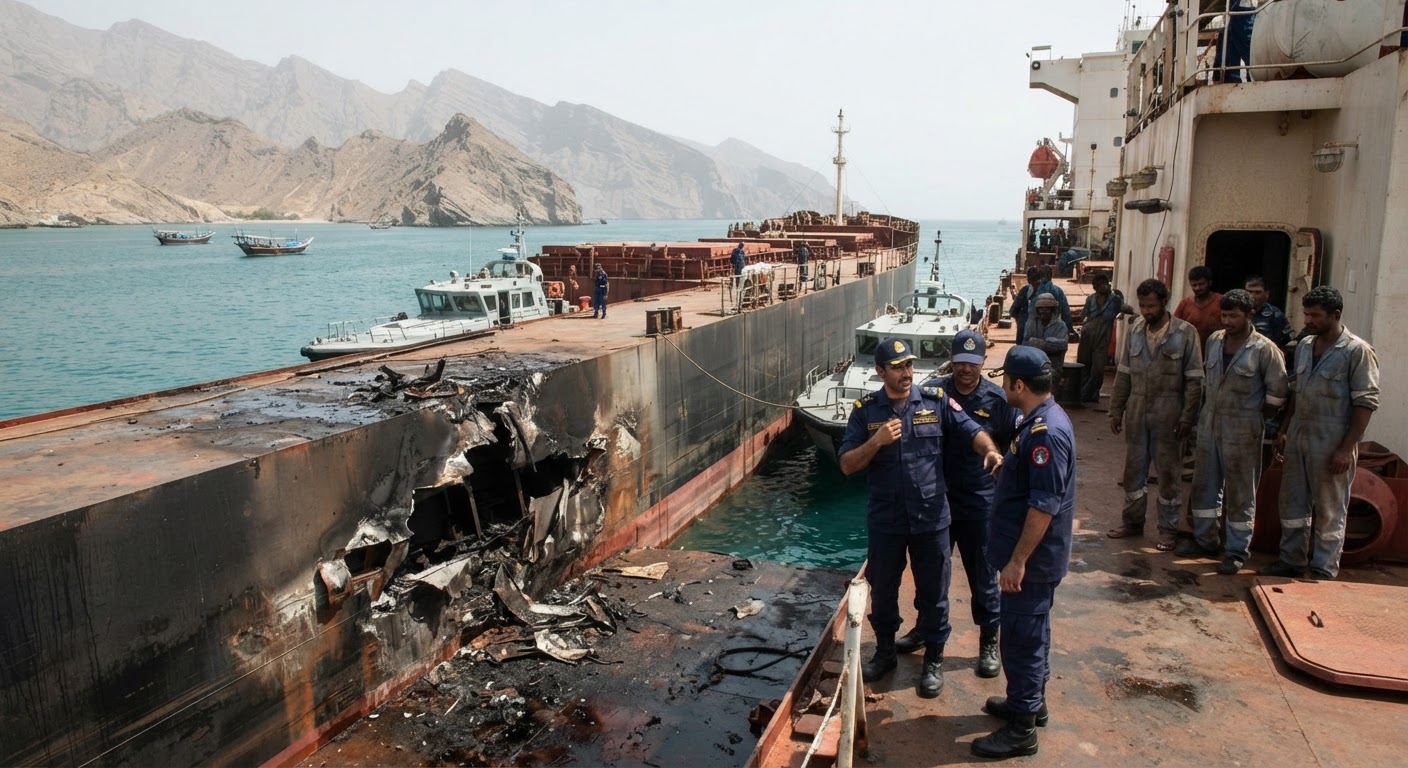
A violent maritime attack near the Strait of Hormuz has claimed the life of an Indian seafarer, sparking fresh security concerns in the region. On 23 September 2026, the MV Cape Dao, a bulk carrier flying the flag of Antigua and Barbuda, was targeted by two projectiles while navigating the waters from Mina Saqr toward India.
The Attack off the Musandam Coast
The incident took place approximately 4 to 5 kilometers from the Musandam coast of Oman. According to the Forward Seamen’s Union of India (FSUI), the two projectiles were identified as torpedoes. The strikes caused immediate and severe damage to the vessel:
- First Strike: Impacted the C-deck accommodation area.
- Second Strike: Hit the hull in the vicinity of the engine room, triggering an onboard fire.
Tragedy for a Young Seafarer
The attack resulted in the death of 26-year-old Suraj Yadav, a wiper from Deoria, Uttar Pradesh. Yadav died after sustaining critical head injuries during the explosion. He was one of 20 Indian nationals serving aboard the 28-member crew.
While the loss is profound, the Royal Navy of Oman successfully executed a rescue operation, bringing the remaining 19 Indian crew members safely to shore.
Government Response and Regional Unrest
The Indian Ministry of External Affairs (MEA) and the Indian Embassy in Muscat have confirmed the fatality and issued a strong condemnation of the attack. Officials have characterized the ongoing targeting of commercial shipping as a deeply concerning development for international maritime safety.
"The Indian government is committed to the safety of its seafarers and will ensure the repatriation of Suraj Yadav’s remains," stated Ports Minister Sarbananda Sonowal.
This strike is part of a troubling pattern of security incidents involving Indian maritime workers in the Gulf of Oman and the Strait of Hormuz throughout 2026. In response to the rising danger, maritime unions have formally communicated their anxieties to the Prime Minister, demanding greater protections for civilian crews caught in regional conflicts.
Beyond the immediate threat of kinetic attacks, the incident has brought renewed scrutiny to the broader vulnerabilities of maritime workers. These include not only the physical risks of operating in high-conflict zones but also systemic labor issues such as the retention of passports and the non-payment of wages reported within the sector.