Indian Expat Leaves UAE After 50 Years Amidst Growing Pressures
Abidh CK's departure after 50 years in the UAE highlights the rising economic pressures and wage issues facing Indian migrant workers.
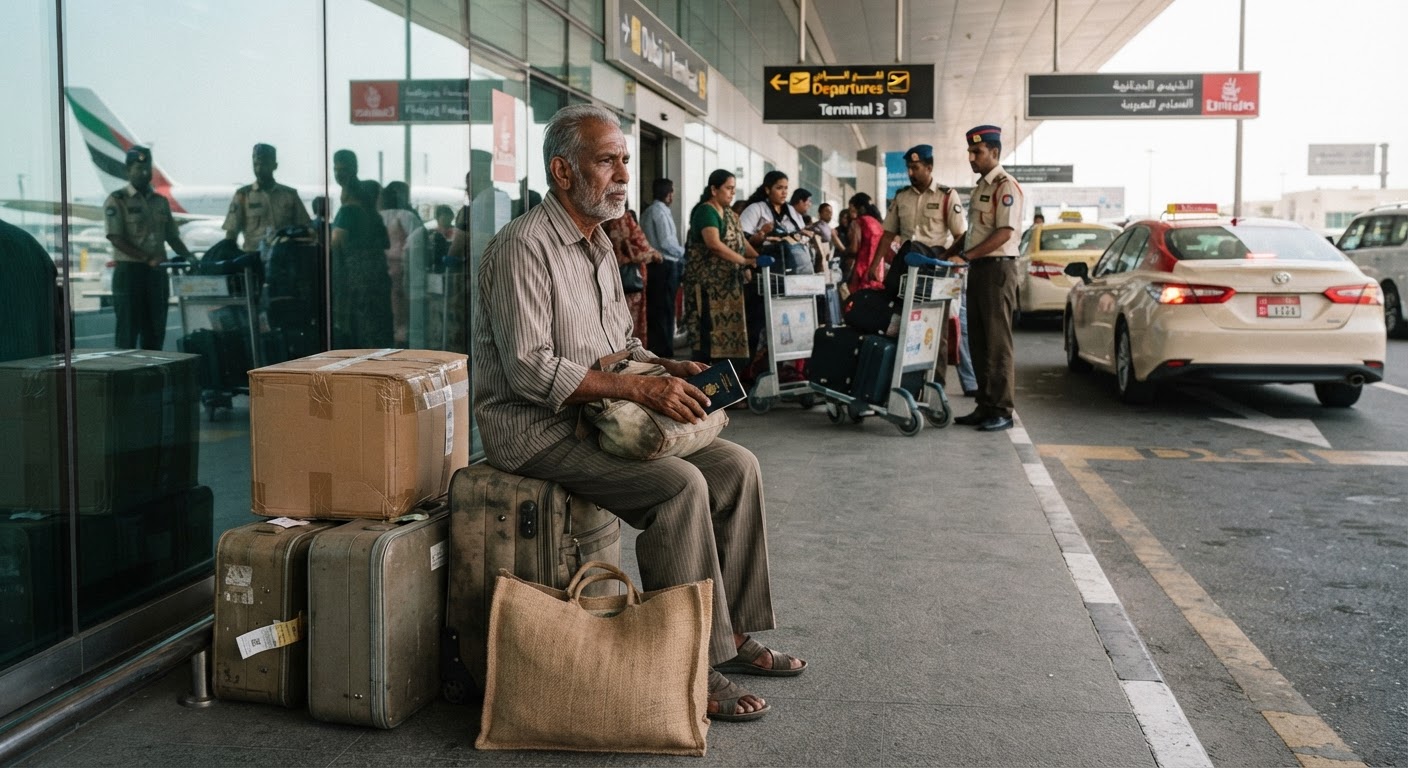
Abidh CK is set to depart the United Arab Emirates on November 10, 2026, marking a historic milestone: exactly 50 years to the day since he first arrived in the country. The departure of the Kerala-born Indian expat leaving UAE serves as a poignant reflection of both a life well-lived and the shifting, often difficult, economic realities currently facing migrant workers in the Gulf.
A Half-Century Journey of Resilience
Abidh’s journey began on November 10, 1976, when he arrived at the age of 16. He carried with him just Dh10, the result of exchanging Rs 2,000 at the Bombay airport. His early years were defined by hard work in the textile markets of Sharjah, where he earned an initial salary of Dh700.
Despite the modest start, Abidh was able to build a foundation for his family in India. He consistently remitted Dh250 of his earnings back home, which allowed him to fund the renovation of his family residence following the passing of his father. Over the decades, he successfully navigated the evolution of the regional economy, transitioning from manual commerce to the digital space by launching the portal keralauae.com.
Beyond his professional achievements, Abidh raised a family in the Emirates, including his wife, Sahira, and two daughters. While he expresses deep gratitude for the security the UAE provided him during his tenure, his exit comes at a time when the landscape for expatriate workers is becoming increasingly complex.
The Shifting Economic Reality for Migrants
Abidh’s departure highlights a growing trend of vulnerability among the Indian diaspora. While he found success, many current laborers in the region face much harsher conditions. Reports indicate that workers in the UAE and Saudi Arabia are struggling with stagnant wages, with some earning between SAR 1,000 and 2,500 for grueling 12-to-16-hour shifts.
The modern migrant worker also faces systemic instabilities, including:
- Job Insecurity: The constant risk of sudden company closures and visa cancellations.
- Regulatory Pressures: Ongoing concerns regarding the lingering effects of the kafala system.
- Wage Disputes: Increasing instances of workers seeking intervention from embassies to resolve unpaid or insufficient wages.
Rising Costs and Financial Burdens
The pressure is not limited to the Gulf; the financial burden is also mounting for families back in India. For many expatriates, the NORKA Care insurance program in Kerala—intended to provide a safety net—has become significantly more expensive. Recent data shows that premiums have surged by 166% to 233%.
For a family cover of Rs 5 lakh, costs that were once Rs 13,411 have climbed to between Rs 35,664 and Rs 44,718. This sharp increase has prompted a review by the Kerala High Court due to significant deficits in claims. As Abidh CK closes his chapter in the UAE, his story stands in stark contrast to the rising costs and economic instability currently facing the next generation of migrant workers.