India And UAE Trade Hits 101 Billion Dollars As New Projects Launch
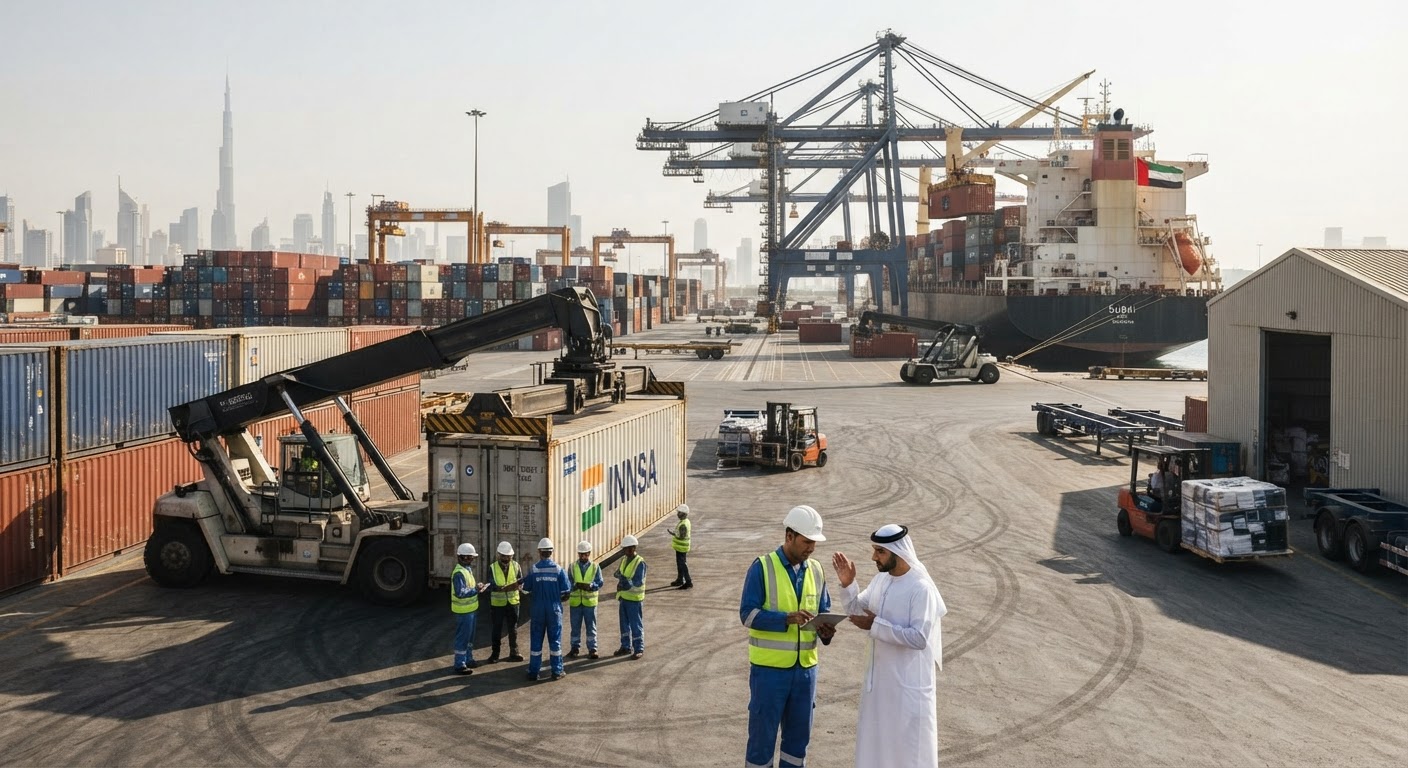
Bilateral trade between India and the United Arab Emirates reached $101.25 billion in the 2025-26 fiscal year, according to the Emirates News Agency (WAM). This marks the second consecutive year that India-UAE trade has exceeded $100 billion. Both nations have now set a target to increase this volume to $200 billion by 2032.
- India-UAE trade hits $101.25 billion for 2025-26.
- Target set to reach $200 billion by 2032.
- Focus shifts to Bharat Mart and Virtual Trade Corridor projects.
Trade Breakdown and CEPA Agreement
Data from India's Department of Commerce shows that India exported approximately $37.36 billion in goods to the UAE in 2025-26, while imports from the UAE totaled approximately $63.89 billion, resulting in a total merchandise trade of $101.25 billion. Since the India-UAE Comprehensive Economic Partnership Agreement (CEPA) took effect on May 1, 2022, trade structures have evolved, focusing on customs, market access, rules of origin, and investment facilitation.
Bharat Mart and Virtual Trade Corridor
Key strategic initiatives moving forward include the Bharat Mart project in Dubai's Jebel Ali Free Zone (JAFZA) and the Virtual Trade Corridor (VTC). Bharat Mart, a dedicated trade hub spanning approximately 2.7 million square feet, is designed to serve as a wholesale and retail marketplace for Indian manufacturers and exporters. It offers multimodal connectivity via Jebel Ali Port, Al Maktoum International Airport, and Etihad Rail. The facility includes showrooms, warehousing, light industrial units, offices, and meeting areas, with dedicated space planned for Indian MSMEs and women-led businesses. Target sectors include machinery, electronics, auto components, medical equipment, furniture, apparel, processed food, pharmaceuticals, cosmetics, plastics, rubber products, and handicrafts.
The Virtual Trade Corridor aims to enhance digital connectivity between trade and customs systems to automate the exchange of regulatory data. The project utilizes the Master Application for International Trade and Regulatory Interface (MAITRI) as a digital backbone, integrating Indian systems such as ICEGATE, the National Logistics Portal-Marine, and the Unified Logistics Interface Platform with corresponding UAE platforms to reduce duplicate paperwork and clearance times. However, these systems do not waive regulatory obligations regarding customs, food safety, and standards.
Business Rules and Future Steps
For Indian businesses operating in or entering the UAE, success requires careful adherence to product HS codes, Rules of Origin, and sector-specific conformity requirements. Companies must verify product approval statuses with local importers and navigate distinct customs and tax treatments based on whether goods are destined for the UAE local market or re-export. Future developments will center on the operational timeline of Bharat Mart, live customs integrations for the VTC, and broader infrastructure initiatives like the India-Middle East-Europe Economic Corridor (IMEC).