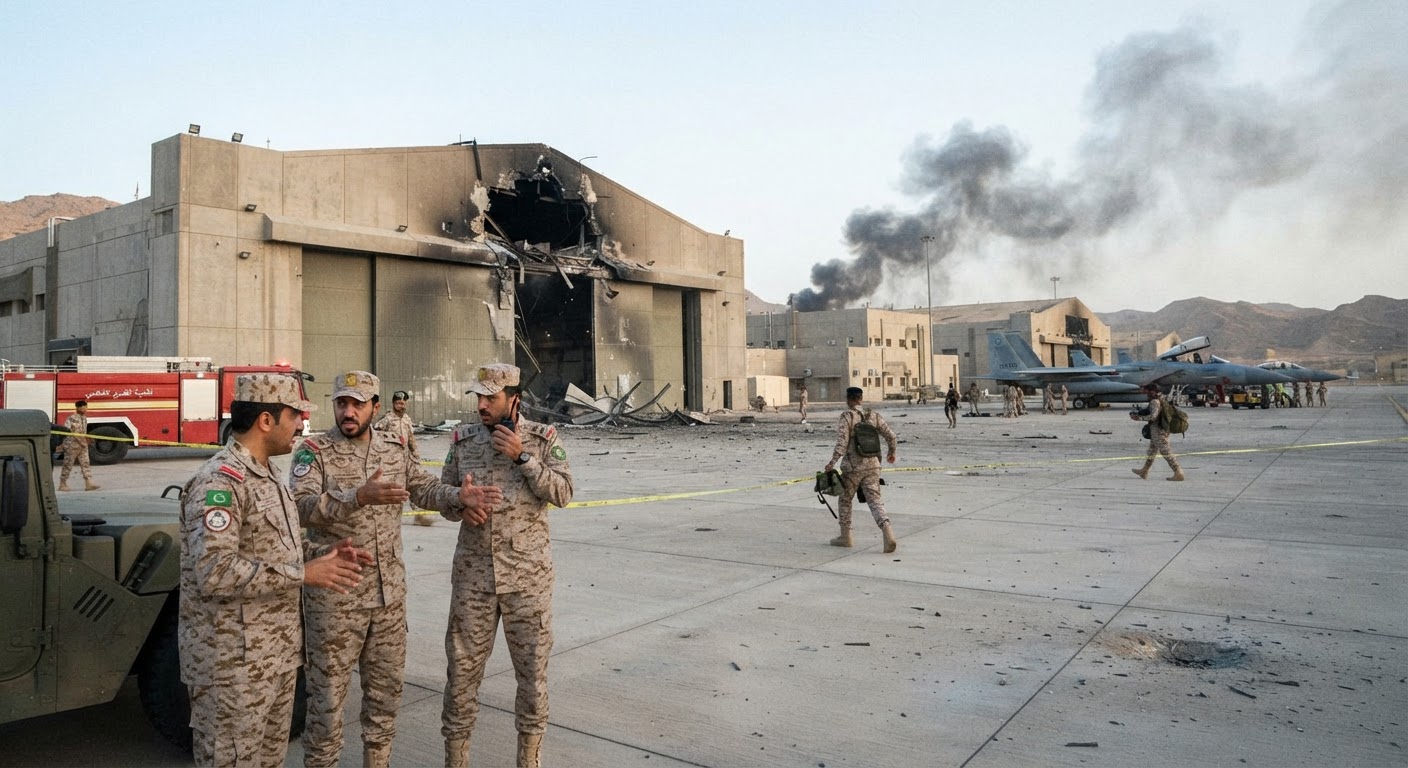
On September 14, 2026, Yemen’s Iran-aligned Houthi forces announced a large-scale strike on Saudi Arabia’s King Khalid Air Base in Khamis Mushait. Spokesman Yahya Saree claimed that ballistic missiles and drones hit hangars, radar, runways, and ammunition depots, framing the attack as retaliation for over 300 Saudi airstrikes conducted within the previous five days. Riyadh has not confirmed any damage to the facility. Key updates on the escalating regional crisis include:
- Houthi forces claimed large-scale strikes on King Khalid Air Base using ballistic missiles and drones in retaliation for Saudi airstrikes.
- Oman postponed a high-level Iran-GCC meeting meant to negotiate a Strait of Hormuz transit deal.
- Houthi forces seized the Greater and Lesser Hanish islands, placing the Bab al-Mandeb Strait under greater control and blockading Saudi shipping.
- The East-West Pipeline remains shut after a drone strike, threatening four percent of global oil supply.
- Brent crude prices reached $110 amid rising civilian casualties and tanker crew deaths.
Diplomatic Talks Postponed
The strike occurred on the same morning that Oman announced the postponement of a high-level Iran-GCC meeting intended to negotiate a transit deal for the Strait of Hormuz. Omani Foreign Minister Badr Albusaidi stated the meeting was delayed for the sake of consensus, while Iranian spokesman Esmaeil Baghaei alleged that Riyadh was responsible for the cancellation. Bahrain had previously indicated it would not attend the summit.
Meanwhile, Houthi forces have seized the Greater and Lesser Hanish islands following their recent takeover of Mocha and Perim (Mayun). These territorial gains have placed the Bab al-Mandeb Strait under significantly greater Houthi control than at any point since 2015, effectively blockading Saudi shipping. Furthermore, the East-West Pipeline remains shut following a drone strike on Friday, which Riyadh and Washington have attributed to Iran-backed networks in Iraq. Traders informed Reuters that stock levels at Yanbu could sustain exports for only five to seven days, threatening 4 percent of global oil supply. Sources told Reuters that Iranian Revolutionary Guard officers assisted in the push for Mocha and advocated for increased aggression against Saudi targets, though Tehran maintains it does not command the Houthi forces. The regional instability has pushed Brent crude to $110. The human toll continues to rise, with 73 civilian injuries reported in southern Saudi cities last week, two individuals wounded and a mosque damaged in Jazan, and confirmed deaths of tanker crews in the Strait of Hormuz. Gulf states remain divided in their diplomatic approaches as the escalating conflict continues to threaten global energy transit routes.