Houthi Strikes on Riyadh Airport Kill 14, Including Indian Engineer
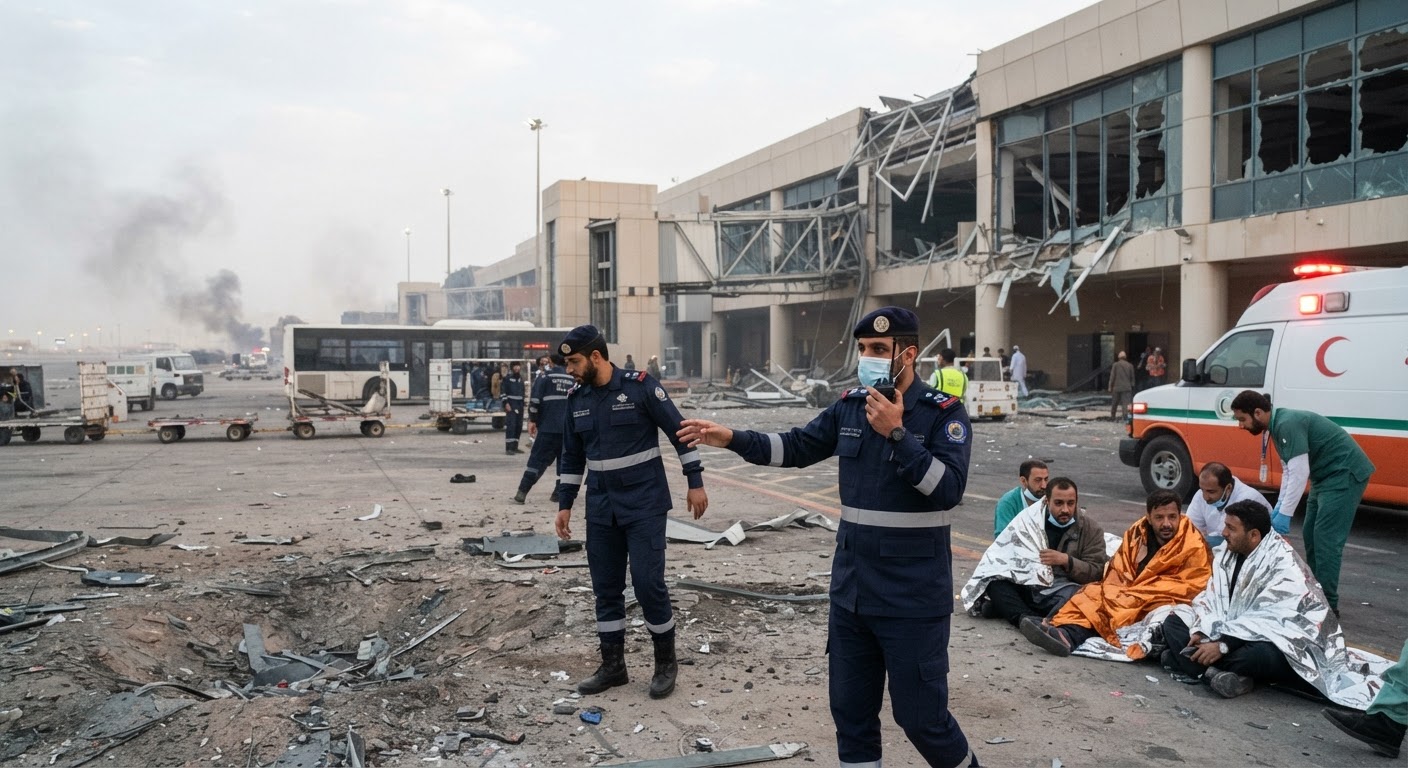
A wave of devastating attacks launched by Yemen’s Iran-backed Houthi rebels against King Khalid International Airport in Riyadh has left at least 14 people dead and more than 300 injured. The successive strikes, which occurred over the weekend of October 10-11, 2026, utilized a lethal combination of ballistic missiles, cruise missiles, and drones, turning a busy travel hub into a zone of carnage.
A Family Tragedy in Riyadh
Among the many lives lost was Mohammed Yousuf Ali, a 46-year-old IT engineer hailing from Mehdipatnam, Hyderabad. Mr. Ali was in Saudi Arabia on an Umrah pilgrimage with his family when the catastrophe struck. The family was at a check-in kiosk at approximately 3 p.m. local time on October 10 when the terminal was hit.
While Mr. Ali succumbed to his injuries, his family members suffered traumatic wounds:
- Aman (18) and Wasi (16): His sons sustained severe injuries requiring surgery, including the loss of toes.
- Sameera and Maryam (11): His wife and daughter also sustained injuries during the blast.
The Indian Embassy in Riyadh has confirmed it is actively assisting approximately 11 injured Indian nationals with medical care and is working on the repatriation of the deceased.
Details of the Aerial Assault
The Saudi General Authority of Civil Aviation (GACA) reported that the violence unfolded in two major waves. The initial strike on Saturday killed 12 people, with victims identified from a diverse range of nationalities, including:
- Saudi Arabia: Four citizens.
- Bangladesh: Two citizens.
- Other victims: Individuals from the United States, Egypt, Jordan, Syria, Palestine, and Sudan.
Among those identified were Egyptian Flynas flight attendant Azza Ramzi Muhammad Hassan and Syrian resident Buthaina Ahmad Oweida. A second strike on Sunday, October 11, targeted the Terminal 3/4 area, resulting in the death of one Pakistani resident and injuring 11 others.
The Houthis have officially claimed responsibility for the operations. Spokesman Yahya Saree declared that Saudi airports and airspace—with the exceptions of Mecca and Medina—are now considered operational zones for their strikes.
Massive Aviation and Energy Disruption
The attacks have sent shockwaves through the global aviation industry. Data from Cirium indicates that approximately one-third of all scheduled departures from Saudi Arabia were cancelled by Monday, October 12. Major international carriers, including Air France, KLM, and Lufthansa, suspended their flights, and travelers faced significant disruptions on routes connecting the UAE and Saudi Arabia.
Beyond travel, the conflict is threatening global economic stability. Qatar’s Energy Minister, Saad al-Kaabi, warned that the ongoing escalation has triggered a global energy crisis, impacting roughly 20% of all oil and gas flows.
Regional and International Response
The escalation has prompted urgent calls for unity among Gulf nations. UAE presidential adviser Anwar Gargash emphasized the need to revive joint Gulf defence cooperation, stating that "Gulf security is indivisible."
Saudi Energy Minister Prince Abdulaziz bin Salman noted that the severity of these attacks necessitates a serious response. Meanwhile, the international community has issued widespread condemnations, including from Turkey, Egypt, Pakistan, France, and China.
The conflict has induced a global energy crisis affecting 20% of oil and gas flows.
Diplomatic channels remain active as Iranian Foreign Minister Abbas Araghchi held discussions with his Saudi counterpart, Faisal bin Farhan, to address the deteriorating situation.