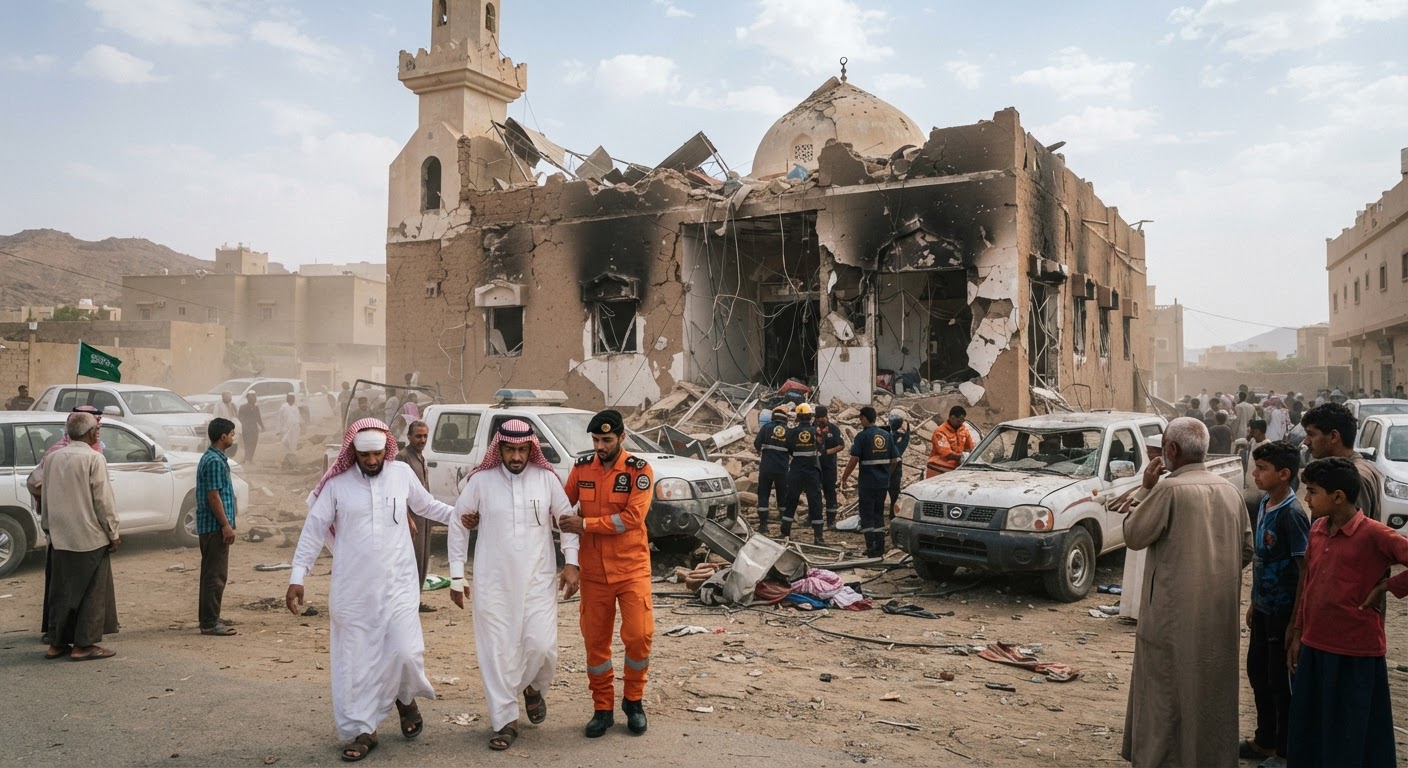
On September 13, 2026, Yemen’s Iran-aligned Houthi forces fired a projectile into the Jazan region of Saudi Arabia, causing two injuries and significant damage to a mosque, buildings, and vehicles in the Al-Tuwal governorate. While the Houthis claimed to be targeting a military base in Sharurah, Saudi Civil Defence characterized the strike as a violation of international humanitarian law. Key details of the recent regional escalation include:
- Houthi projectile strikes a mosque in Saudi Arabia causing two injuries
- Drones launched from Iraq force the shutdown of the East-West crude pipeline
- Oil prices exceed 100 dollars per barrel amid ongoing supply concerns
Concurrently, Saudi Arabia’s East-West crude pipeline, which serves as an emergency bypass to the Strait of Hormuz, remains shut as a precautionary measure following drone strikes launched from Iraq’s Maysan province. These drones hit pumping stations in the Riyadh and Medina regions, resulting in reported injuries. The Iraqi government has launched an investigation and dismissed a local commander, while President Trump suggested Iran was 'probably' responsible for the attack, though no group has officially claimed responsibility. The closure of this pipeline, which had been critical for maintaining global supply while the Strait of Hormuz remained obstructed, adds to existing market concerns as oil prices exceed $100 per barrel.
For the past six months, the region has faced intense pressure from Iranian naval lockdowns at Hormuz, Houthi threats in the Red Sea, and now, strikes on the Saudi pipeline artery to Yanbu. A ministerial-level meeting between Iran and Gulf littoral states is scheduled for Monday in Oman, though Bahrain has confirmed it will not participate until diplomatic ties are restored. Iranian officials stated they do not expect a signed agreement on the status of Hormuz at this meeting. Meanwhile, Houthi forces have seized Mocha and expanded their presence near the Bab el-Mandeb strait. Recent reports also indicate explosions off Qeshm Island and a vessel strike within Hormuz waters as reported by the UKMTO. Despite these escalations, Gulf nations including the UAE, Qatar, Oman, Saudi Arabia, and Bahrain are navigating a precarious landscape of Iranian missile and drone threats, with mediation efforts currently ongoing.