Houthi Missile and Drone Strikes Target Riyadh and Khamis Mushait
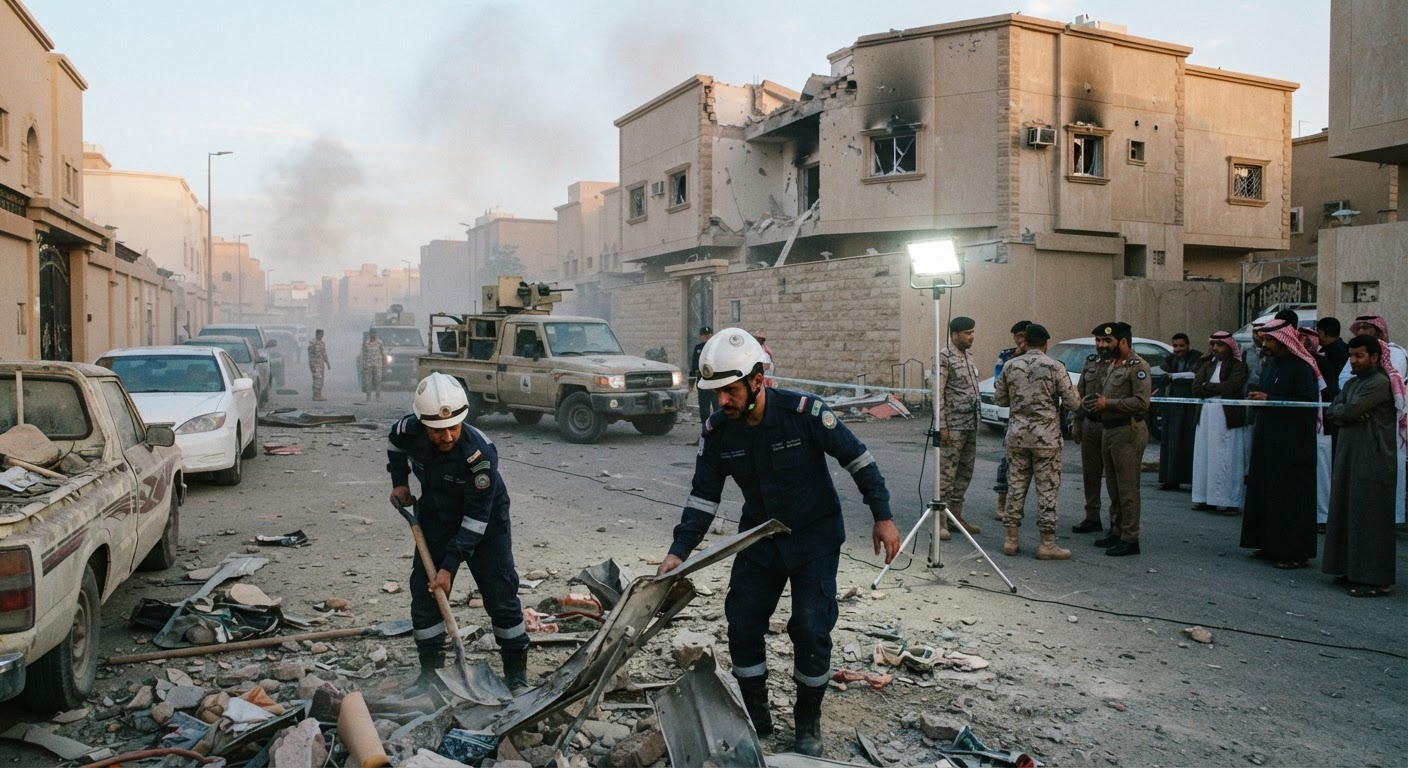
The skies over Saudi Arabia became a flashpoint for regional tension this Saturday as the Iran-backed Houthi militia launched a series of ballistic missiles and drones aimed at the capital, Riyadh, and the southern city of Khamis Mushait.
The Saudi-led coalition confirmed that its advanced air defense systems were activated to counter the aerial assault. According to official reports, the defenses successfully intercepted:
- Two ballistic missiles heading toward Khamis Mushait.
- Two drones directed at the capital, Riyadh.
While the strikes caused significant alarm, authorities confirmed that no casualties were reported following the interceptions.
GCC Condemns Terrorist Attacks
The escalation has drawn sharp condemnation from the Gulf Cooperation Council (GCC). Speaking from Riyadh, GCC Secretary-General Jasem Mohamed Albudaiwi described the incident as a "grave escalation" and characterized the strikes as "terrorist Houthi attacks."
Albudaiwi emphasized that the strikes represent a "flagrant violation of the Kingdom’s sovereignty" and pose a "direct threat to civilian safety and regional stability." He further affirmed that the six GCC member states—Saudi Arabia, the UAE, Qatar, Bahrain, Kuwait, and Oman—stand in complete unity with Riyadh to defend its territorial integrity.
"The GCC stands united with Riyadh to support all measures taken to defend Saudi territorial integrity."
A Breakdown of the De-facto Truce
These latest hostilities mark a significant shift in the regional landscape. Since July, the Houthis have systematically dismantled a four-year de-facto truce. Their recent activities have included:
- Seizing strategic coastlines along the Red Sea.
- Capturing vital islands near the Bab al-Mandab Strait.
- Conducting attacks on Saudi energy tankers.
The threat to infrastructure is mounting; earlier this month, the militia claimed responsibility for strikes that ignited a fire and produced heavy smoke near an Aramco fuel tank close to King Khalid International Airport in Riyadh.
Regional Security and Economic Impact
In a bid to bolster its defense, Saudi Arabia is currently engaged in urgent high-level talks with the chiefs of staff from Turkey and Pakistan. The goal is to establish a more robust and broader military defense umbrella to protect the Kingdom from further incursions.
The ongoing instability is already rippling through the regional economy and daily life, resulting in:
- Flight disruptions across the region.
- Increased insurance costs for maritime and aviation sectors.
- Volatility in fuel prices.
- Security precautions in Riyadh, including the transition of some school classes to online learning.
As tensions rise, GCC officials are calling upon the UN Security Council to take decisive and concrete action against the Houthi militia and their suppliers to prevent further destabilization of the Middle East.