All Reason Why IRAN Targeting UAE Than Any Other Countries With Drones and Missiles.
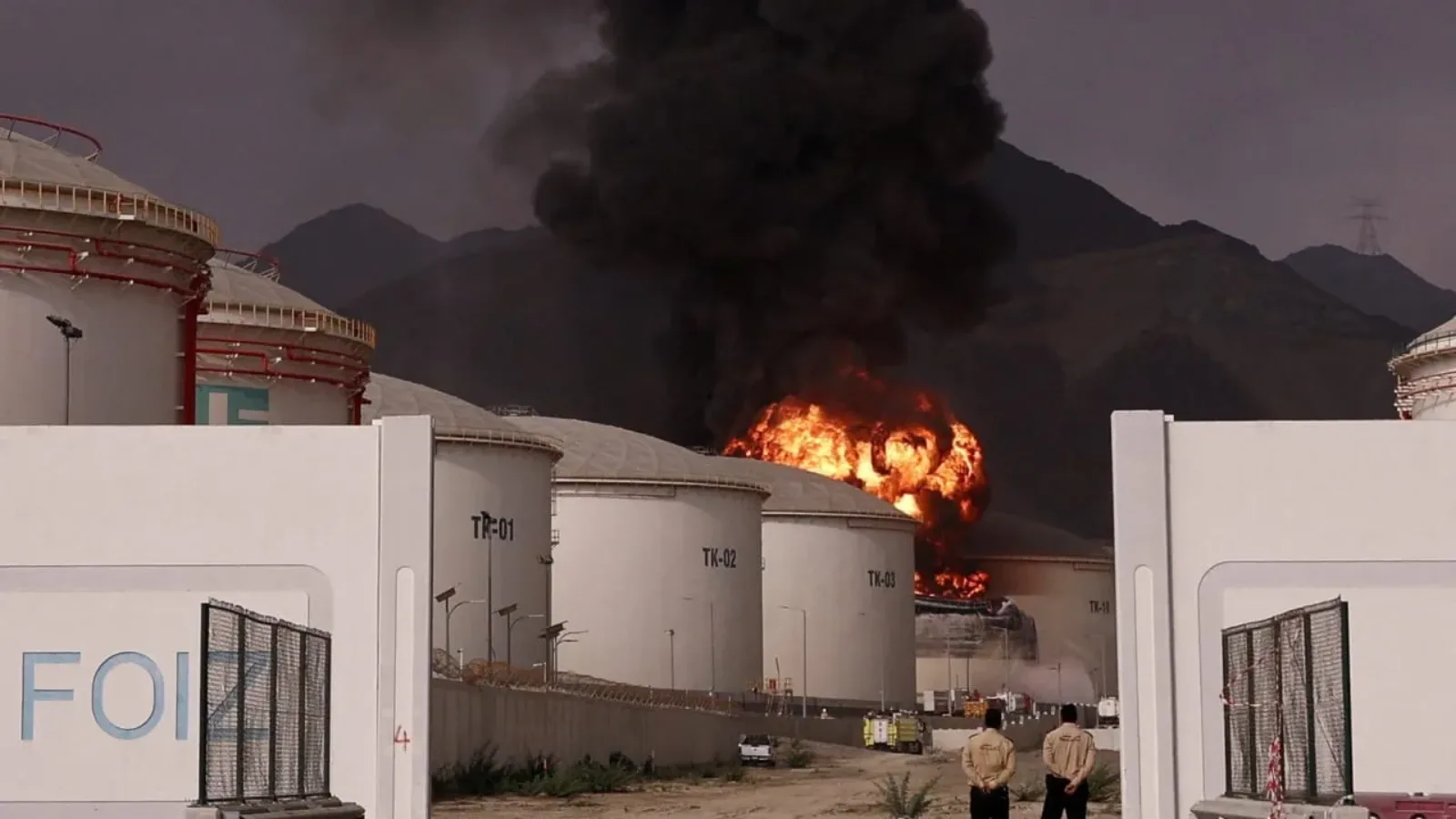
Iran’s decision to focus so much of its missile-and-drone campaign on the United Arab Emirates has puzzled many observers, especially because Abu Dhabi did not openly join the war against Tehran. But the pattern makes more sense when viewed through the lens of coercion, signaling, and strategic vulnerability. The UAE is not merely a neighbor of Iran; it is one of the Middle East’s most important commercial, financial, and aviation hubs, and it hosts critical U.S. military infrastructure that Tehran sees as part of the broader American security network.
At the most basic level, geography gave Iran an advantage. The UAE lies within easy range of Iranian missiles and drones, allowing Tehran to launch repeated attacks at relatively low cost. Compared with more distant or heavily fortified adversaries, the Emirates offers a target that can be reached quickly, repeatedly, and with a mix of military, economic, and psychological effects. That makes the UAE especially valuable in a conflict where Iran wants to show reach without committing to a direct, prolonged conventional war.
The UAE’s own success also made it vulnerable. Over two decades, the country built a reputation as the Gulf’s safest bridge between East and West, a place where global trade, tourism, finance, and logistics could flow with minimum friction. That openness is the source of its strength, but it is also the source of its exposure. A strike near a port, airport, or energy installation in the UAE is not just a local incident; it is a global signal that the Gulf economy is under threat. Iran understood that even limited disruption could raise insurance premiums, slow shipping, unsettle markets, and damage confidence in the Emirates as a secure base for business.
Political symbolism matters too. The UAE’s close security ties with the United States and its normalization with Israel through the Abraham Accords gave Tehran a ready-made narrative. Iran could portray the Emirates as part of a hostile regional alignment, even though Emirati officials insisted they were not a party to offensive operations against Iran. In Iranian messaging, the UAE became more than a Gulf state; it became a symbol of the regional order Tehran opposes.
Another reason the UAE drew heavier fire is that Iran likely expected restraint. Abu Dhabi has invested heavily in air defense, diplomacy, and international legal measures, but it has generally avoided dramatic retaliation. That makes the UAE a useful pressure point for a state like Iran that wants to impose costs without inviting immediate escalation. If a target is important, visible, and unlikely to respond in kind, it becomes ideal for coercive messaging.
The attacks also fit a broader strategy aimed at weakening confidence in the Gulf’s economic model. The UAE depends on being seen as stable, connected, and predictable. Iran’s strikes sought to undermine that image by showing that even the region’s most polished hub can be disrupted. In that sense, the target was not just territory; it was the UAE’s brand as a safe global center. The psychological effect may have been as important as the physical damage.
This helps explain why the UAE was hit more heavily than many other countries. It concentrated multiple Iranian concerns in one place: U.S. military presence, ties to Israel, economic visibility, proximity, and the potential to influence global markets. Iran was not simply choosing where to fire missiles. It was choosing where each strike would create the most political, economic, and symbolic impact.
For the UAE, the lesson is stark. Its success as a crossroads of global commerce makes it influential, but that same visibility makes it a high-priority target in regional conflict. Iran’s campaign against the Emirates was therefore not an accident of geography or a random act of retaliation. It was a deliberate strategy designed to pressure a state that sits at the center of the Gulf’s economic and geopolitical map